Specialized Rehabilitation & Pain Care in Gangnam, Seoul · Dedicated International Concierge


Medical Guide
When Musculoskeletal Pain Needs a Specialist Assessment
The patient-side thresholds that move a musculoskeletal problem from self-care to a rehabilitation medicine assessment, and how to judge if yours apply.
Schedule a ConsultationWhen Musculoskeletal Pain Needs a Specialist Assessment
Medically reviewed by Dr. Kim DaeHwan, Director, Well Rehabilitation Clinic; Specialist in Rehabilitation Medicine
Most aches settle without anyone's help, which is exactly why the ones that do not are so easy to keep tolerating. The threshold for booking a rehabilitation medicine assessment is not a pain score and not a fixed number of weeks: it is a set of things you can observe about your own situation, and this article sets out what they are. If you recognize three or four of them in your own case, the self-care phase has already ended whether or not you have admitted it.
One thing first, and then it is set aside. There is a separate and more urgent question — whether a symptom needs medical attention now — and it is not the question this article is about. The National Library of Medicine's MedlinePlus service is clear that some presentations call for contacting a provider straight away rather than for planning an appointment, including new numbness, weakness, loss of movement, or any change in bladder or bowel control, and it advises getting in touch when back pain is severe, when it has not settled after three days, or when it began with an injury. If any of that describes you, act on it locally and stop reading here. What follows assumes you are safe and simply stuck.
The strategy question, not the pain question
Self-care is a strategy, and strategies can be evaluated. Once you frame the problem that way, the decision to bring in a specialist becomes much less arbitrary than "it still hurts."
A sensible self-management trial for a musculoskeletal complaint has a recognizable shape. MedlinePlus, the patient education service of the US National Library of Medicine, describes it in its guidance on tendon and heel problems: back off the activities that provoke the symptoms, keep moving with lower-load alternatives such as swimming or cycling rather than stopping altogether, use cold sensibly on an irritated area, and rebuild gradually rather than returning to the previous level in one step. For persistent symptoms more broadly, it lists the same family of measures — staying active within limits, managing stress, keeping weight in a healthy range, adding low-impact exercise.
If you have genuinely done that, you have run an experiment, and an experiment has a result. The specialist question is really a question about what the result was.
Reading the trend rather than the level
Pain intensity on any given day is a poor signal. The trend across weeks is a good one, and there are three trends worth distinguishing, because they mean different things.
Steady improvement. The problem is smaller than it was a month ago, you are doing more than you were, and the direction has been consistent. Keep going. This is the pattern self-care exists for.
Improvement that stopped. Things got better for a while and then flattened, and the flat part has lasted longer than the improving part did. A plateau is not failure, but it is information: whatever your self-management was addressing, it has finished addressing it, and something else is now the limiting factor. Identifying what that something else is requires an examination.
Improvement that reverses on contact with real life. You feel fine until you play a round of golf, lift a suitcase, sit through a long meeting, or sleep awkwardly — and then you are back at the start. This is the pattern most often mistaken for progress, because between episodes there is nothing to report. It usually means the tissue has not regained the capacity the activity demands, which is a rehabilitation problem by definition.
A fourth trend hardly needs describing: nothing has changed at all. If several weeks of genuine load modification have produced no measurable difference, the modification is not the treatment your problem needs.
The inventory of things you have stopped doing
This is the single most useful test a patient can apply, and almost nobody applies it, because the changes happen one at a time and none of them feels like a decision.
Write down what you no longer do because of this problem. Not what hurts — what you have quietly dropped. The tennis you stopped booking. The bag you now carry on the other shoulder. The stairs you take one at a time. The bed you left for a chair. The overhead shelf whose contents migrated downward. The run that became a walk.
MedlinePlus defines rehabilitation as care aimed at getting back, holding onto, or improving the abilities a person needs for daily life, with the goals set individually according to which abilities were affected and how badly. That definition is also a diagnostic instrument for a patient. If your list has more than two or three items on it, you are no longer managing a symptom; you are managing a shrinking life around a symptom, and the specialty whose entire organizing principle is restoring function is the appropriate place to take that.
Length of the list matters more than severity of any single item. Four small concessions are a stronger signal than one dramatic one.
Compensation: when the problem has recruited other body parts
Related, and worth separating out. Compensation is what happens when you keep doing an activity by changing how you do it.
A limp. Lifting one-armed. Turning the whole trunk instead of the neck. Rising from a chair by pushing with the hands. Sleeping in one position because the others are unavailable. None of these registers as pain, which is why patients do not report them, and all of them redistribute load onto structures that were not designed for it.
Compensation is a patient-observable finding, and it is the sort of finding a movement examination is built to interpret. The clinic's documented starting point for postural and alignment work is an evaluation of body alignment and movement patterns, and for hands-on treatment it is an assessment of the painful or restricted area — both of which are attempts to see what you have been doing instead of what you used to do.
If someone in your household has commented on how you move, count that as a second opinion you did not have to ask for.
Sleep, mood, and the widening footprint
Persistent pain does not stay where it started. MedlinePlus records that long-running pain can affect nearly every part of daily life, mood and relationships included, and that stress and low mood can make the pain itself worse — a loop rather than a coincidence. It also notes that fatigue and disturbed sleep commonly travel with it.
For the purposes of this article, treat those as thresholds rather than as background. Pain that reliably interrupts your sleep has crossed a line, because sleep loss degrades the tolerance and the recovery capacity that self-management depends on. Pain that has started to shape your mood or your willingness to make plans has crossed the same line from the other direction.
Patients often leave these out of a clinical account because they feel like complaints rather than symptoms. They are symptoms, and they belong in the history.
Medication creep
A quiet threshold, easily missed. MedlinePlus lists pain relievers among the standard options for managing symptoms, alongside non-drug approaches, and there is nothing wrong with using them appropriately.
What is worth noticing is the trend. Are you taking something more often than you were? Taking it before an activity rather than after it, so that you can do the activity at all? Reaching the point where the medication is what makes the day workable? None of that is a moral failure; all of it is evidence that the underlying problem has not been addressed and is being covered over instead. Bring the pattern to an assessment, because the pattern is clinically informative in a way the individual doses are not.
The problem that keeps coming back
Recurrence is a different threshold from persistence, and it is often the more revealing one.
If the same shoulder, the same heel, the same side of the lower back has flared three times in two years, each time settling with rest and each time returning, you do not have three episodes. You have one unresolved problem with quiet intervals. StatPearls, the peer-reviewed clinical reference published on the National Library of Medicine's Bookshelf, makes the point for tendon problems specifically: where the underlying cause is left in place, symptoms tend to come back whichever treatment was used.
The shoulder illustrates why the cause is worth pinning down. MedlinePlus attributes most rotator cuff injuries to repeated arm movements, particularly reaching overhead, which means the provoking exposure is usually still present in the person's daily routine after each episode settles. A pattern that repeats on that schedule is telling you something about the loading, not only about the tissue.
That is precisely the situation an evaluation is for. A recurrence pattern gives a clinician information that a first episode does not — what provokes it, what settles it, how long the interval is — and that information is usually wasted because nobody ever collects it.
When you have already had treatment
A distinct threshold, and a legitimate one: you have had care for this problem and it did not hold.
Previous treatment and its result is one of the things the clinic reviews at consultation, along with your symptoms, your history, the limits on your function, and any imaging that exists. It is reviewed because it narrows the field. Treatment that helped temporarily says something different from treatment that did nothing, which in turn says something different from treatment that was never completed.
So if you are wondering whether a second assessment is justified after a course of therapy that did not work, the answer is that the failed course is itself part of the case for one — provided you can describe what was done, for how long, and what changed.
After an operation, the threshold is a plateau
If surgery is behind you, the question changes shape. Recovery after a musculoskeletal operation is expected to be gradual and uneven, so slow progress is not by itself a reason to seek another opinion.
A plateau is. Progress that has genuinely stopped, function that remains well short of what you were told to expect by this stage, or a return of symptoms after a period of improvement are all reasons for a structured reassessment. The clinic's postoperative work begins with an assessment of current function together with the precautions set by the operating surgeon, and those surgeon-set restrictions remain the outer boundary of anything a rehabilitation clinician does.
One caution belongs here. If an operation is recent and something feels wrong rather than merely slow, that is a question for the surgical team, not a rehabilitation booking.
Why a rehabilitation medicine specialist, specifically
The short version, since the comparison with other routes is covered elsewhere in this library: rehabilitation medicine is the medical specialty organized around function rather than around a single organ or a single technique. MedlinePlus describes physical medicine and rehabilitation as a specialty that helps people regain body functions lost to injury or medical conditions, and includes long-term back and neck pain and recovery from major bone or joint surgery among the things it deals with.
That framing matters for the thresholds above, because almost every one of them is a functional observation rather than a structural one. A list of abandoned activities, a compensation pattern, a plateau, a recurrence interval — these are the raw material of a rehabilitation assessment. The National Center for Complementary and Integrative Health, part of the US National Institutes of Health, notes that nothing sends more people to a doctor than pain; what distinguishes one assessment from another is what it is looking for once you arrive.
Well Rehabilitation Clinic has concentrated on musculoskeletal pain treatment and rehabilitation after surgery since it opened in 2019, and it is led by Dr. Kim DaeHwan, a specialist in Rehabilitation Medicine. Background on the practice is set out on its About Us page.
What an assessment adds that self-assessment cannot
Be realistic about what you are buying. An assessment does not guarantee an answer you like, and it does not make any technique more likely to work.
What it adds is a decision made on findings rather than on inference. The clinic's documented sequence is an examination and a working conclusion first, then a plan built around the individual's physical condition, with progress reassessed and the plan adjusted where the response calls for it. It also includes the possibility of a different answer entirely: a patient may be found to need more medical assessment ahead of any rehabilitation, and where that is the finding, the correct output of the appointment is a referral rather than a treatment.
Being told that your problem sits outside a clinic's scope is a useful result. It is the one result you cannot reach on your own.
MedlinePlus also makes a point about choosing where to be treated that is easy to skip over: alongside what a service does, it counts practical factors such as when the service is open and whether the clinician is someone you can talk to comfortably as considerations in their own right. For a problem you will be discussing repeatedly over a course of care, the second of those is not a soft criterion.
Taking the next step
If several of the thresholds above apply, the action is to arrange an evaluation rather than to continue running the same experiment. Bring the evidence you already have: the list of abandoned activities, the timeline of what you have tried and what happened, and any imaging that exists.
The clinic's route for consultation and booking is its contact page. It works weekdays, Korea Standard Time, and is closed at weekends and on public holidays, which is worth knowing if you are writing from another time zone.
The Bottom Line
- The specialist threshold is not a pain level. It is a set of observable conditions: a plateau, a recurrence pattern, a growing list of abandoned activities, visible compensation, disturbed sleep, and rising reliance on medication.
- Judge the trend across weeks, not the intensity on any given day; improvement that reverses every time you resume normal activity is the pattern most often mistaken for progress.
- Write down what you have stopped doing. MedlinePlus defines rehabilitation in terms of abilities needed for daily life, which makes that list the most clinically useful thing a patient can bring.
- A course of treatment that did not hold strengthens the case for an assessment rather than weakening it, provided you can describe what was done and what changed.
- Separately and more urgently, MedlinePlus advises contacting a provider right away for new numbness, weakness, loss of movement or changes in bladder or bowel control, and for back pain that is severe, has not improved after three days, or followed an injury.
Frequently Asked Questions
How long should I wait before seeing someone?
There is no single number, and a fixed waiting period is the wrong instrument anyway. Judge by whether your self-management is still producing change. Several weeks of genuine load modification with no measurable difference, or a clear plateau after an initial improvement, is a better trigger than any date on a calendar.
My pain is mild. Is that a reason not to go?
Not on its own. Mild pain that has reorganized your week — the activities dropped, the movements altered, the sleep position changed — is a larger functional problem than severe pain that lasted two days and resolved. Severity and impact are different measurements, and rehabilitation medicine is aimed at the second.
I have no imaging. Should I get a scan first?
Not necessarily, and not on your own initiative. Whether imaging is needed, and which kind, is a clinical decision that follows from the examination. Bring whatever already exists; do not arrange new tests speculatively in the hope of arriving better prepared.
What if my problem turns out not to be musculoskeletal?
That is one of the outcomes an assessment is designed to reach. Well Rehabilitation Clinic's position is that where symptoms point toward an underlying condition calling for a different kind of attention, more medical assessment comes ahead of any rehabilitation — and in that situation the appropriate result of the appointment is onward referral.
Does it matter that I have had this for years?
It changes what the conversation is about, not whether it is worth having. A long history supplies information a recent one cannot — what provokes the problem, what settles it, what has already been tried and with what effect. Bring that history in written form rather than trying to reconstruct it in the room.
Is a specialist assessment worth it if I am not sure I want treatment?
Yes, and you are not committing to anything by having one. The output of an evaluation is a working conclusion and a recommendation; whether to act on it is a separate decision, and understanding what you are dealing with has value regardless of what you choose next.
What should I bring to make the appointment worth the trip?
The written timeline of the problem, the record of previous treatment and its effect, any imaging you already hold, and your list of abandoned activities. The last of those is the item patients most often omit and the one a rehabilitation plan is aimed at restoring.
Can any of this be sorted out before I travel to Korea?
The preparation can be, and so can the broader question of whether this is a practice that handles problems like yours. The clinic's contact page is the route for that conversation, and the findings that settle a plan come from the examination itself.
This article is for general informational purposes and does not constitute individualized medical advice. It is not a self-diagnosis tool. Rehabilitation candidacy, technique, and expected outcomes can only be determined through a consultation with a qualified rehabilitation physician.
More Articles
Continue reading educational guides from Well Rehabilitation Clinic.
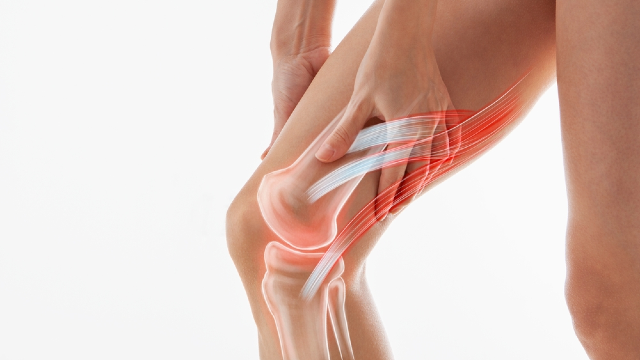
Chronic Tendon Pain Explained: When ESWT May Help
What chronic tendon pain is, why tendons are slow to settle, what conservative care comes first, and where extracorporeal shock wave therapy fits in the plan.
Learn More

Is Manual Therapy Painful? What a Session Feels Like
Is manual therapy painful? What hands-on treatment usually feels like, how the intensity is set, and what to tell your clinician before and during a session.
Learn More

When Musculoskeletal Pain Needs a Specialist Assessment
The patient-side thresholds that move a musculoskeletal problem from self-care to a rehabilitation medicine assessment, and how to judge if yours apply.
Learn More