Personalized Medical Care & Dedicated International Patient Concierge

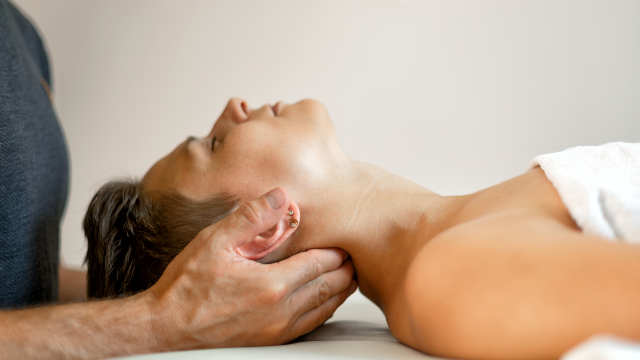
Medical Guide
Postural Correction in Korea: How It Works, Who It Helps
Postural correction in Korea starts with a clinical assessment. Learn what an evaluation covers, who benefits, what the evidence supports, and what to ask.
Schedule a ConsultationPostural and Body Alignment Correction in Korea: How It Works and Who It Helps
Medically reviewed by Dr. Kim DaeHwan, Director, Well Rehabilitation Clinic; Specialist in Rehabilitation Medicine
Postural correction in Korea, delivered inside a rehabilitation medicine clinic, starts with an examination rather than a fixed routine of exercises. The purpose is to understand your symptoms, your movement, and the physical demands of your day, then build a plan around what the examination shows. It is aimed at people who already notice discomfort, stiffness, or a movement limitation that interferes with daily activity. It is not a cosmetic straightening service, and the published research on posture and pain is more mixed than everyday advice suggests.
What postural and body alignment correction means in a rehabilitation setting
In a rehabilitation medicine clinic, postural and body alignment correction is a non-surgical approach to posture, body alignment, and movement patterns. At Well Rehabilitation Clinic it may draw on manual techniques, stretching, strengthening work, and corrective exercises chosen for the individual patient. The clinic also lists postural rehabilitation as a related program covering movement patterns, muscle balance, flexibility, and functional alignment.
MedlinePlus, the patient education service of the U.S. National Library of Medicine, describes posture as the way you hold your body, and separates dynamic posture — how you hold yourself while walking or bending — from static posture, how you hold yourself while sitting or standing. It also notes that the spine carries three natural curves — one at the neck, one at the mid back, one at the low back. A photograph of someone standing still therefore says little about how they move.
Why assessment comes before any correction
Assessment comes first because the same visible posture can have different causes, and the cause changes the plan. The World Health Organization states that a comprehensive clinical assessment — a careful physical examination plus a psychosocial assessment — is essential when low back pain begins, so care can be tailored around a person's values and priorities. It also reports that roughly 90% of low back pain is non-specific, meaning a disease or structural explanation cannot be identified with confidence.
Well Rehabilitation Clinic describes accurate examination and individualized treatment planning, matched to each patient's physical condition, as the basis of its musculoskeletal care. For postural correction it describes a detailed evaluation and a custom plan rather than a standard routine.
Care is led by Dr. Kim DaeHwan, the clinic director. His South Korean specialist qualification is in Rehabilitation Medicine. Residency training in that specialty was served at Bundang Jesaeng Hospital. The Korean Academy of Rehabilitation Medicine lists him as a full member. Directly relevant to posture work, he also carries Titleist Performance Institute (TPI) Certified Professional status, a certification organized around movement assessment. More background is on the clinic's About Us page.
What an assessment actually looks at
A postural assessment here is a clinical interview plus a physical and movement examination, not a photo comparison. At Well Rehabilitation Clinic, consultation for postural and body alignment correction generally covers:
- Your symptoms, including where they are and what makes them better or worse
- Body alignment at rest
- Movement patterns during everyday actions
- Range of motion — how far each joint travels comfortably
- Functional limitations affecting daily activities
- Medical history and previous treatments
- The daily activities and movement concerns you want addressed
A stiff hip or shoulder matters here, because it changes how the spine is loaded during ordinary tasks. Wear comfortable, flexible clothing so the movement part is straightforward.
What the published evidence does and does not support
The evidence linking posture to pain is genuinely contested. A systematic review of systematic reviews published in the Journal of Biomechanics by Swain and colleagues screened 4,285 publications and included 41 reviews. The authors report both positive and null associations between low back pain and factors such as spine posture, prolonged sitting or standing, bending and twisting, and heavy physical work. Their conclusion was that there is no consensus on causality: associations exist in the literature, but do not by themselves explain why low back pain develops.
A viewpoint in the Journal of Orthopaedic & Sports Physical Therapy by Slater and colleagues examined the belief that spinal pain comes from sitting, standing, or bending "incorrectly." The authors call that belief common while the supporting evidence remains weak, and note a large industry of posture products built around claims of correcting posture and preventing pain. The American Academy of Orthopaedic Surgeons adds a narrower point through its OrthoInfo patient resource, which attributes idiopathic scoliosis — a sideways spinal curve — to an unknown cause and states that behaviors such as poor posture or carrying a heavy backpack are not the reason for it.
Active treatment for people who already have symptoms is on firmer ground. The American College of Physicians, in its guideline on noninvasive treatments for low back pain in Annals of Internal Medicine, recommends beginning with nonpharmacologic treatment for chronic low back pain and lists exercise among the options. A 2021 Cochrane review of exercise treatment for chronic low back pain, led by Hayden and colleagues, pooled results from 249 randomized trials. Compared with no treatment, usual care, or placebo at the earliest follow-up, it found pain an average of 15.2 points better and functional limitations an average of 6.8 points better, each on a 100-point scale. Those authors graded both findings as moderate-certainty evidence, a grading that signals moderate confidence in the size of the benefit and leaves room for the real effect to turn out different. They described the pain difference as clinically important, and noted that the change in functional limitations did not reach the threshold they had set in advance for a minimal clinically important difference.
Who tends to benefit, and who needs a different evaluation first
Good candidates are people with posture-related discomfort, movement imbalance, muscle tension, or functional limitations that affect daily activities. A clinical assessment confirms whether the service is appropriate for you.
Others need a different kind of evaluation first. Well Rehabilitation Clinic notes that this service may not suit patients whose symptoms call for evaluation or treatment outside rehabilitation care, and that they may need additional assessment before starting. The World Health Organization's distinction between specific and non-specific low back pain is why that matters: specific low back pain can be explained by an underlying disease, by tissue damage such as a fracture, or by pain referred from another organ, and treatment there addresses that condition. The same body describes spine-related leg pain, sometimes with numbness, tingling, or weakness, as a presentation that may involve a spinal nerve root. Structural curves follow their own pathway: the American Academy of Orthopaedic Surgeons describes screening with a forward bend test, X-rays to measure a curve, monitoring for smaller curves, and bracing between roughly 25 and 45 degrees in a growing child.
What a program involves, including your own part in it
A program combines hands-on treatment, guided exercise, and education, arranged around the assessment findings. It may be paired with therapeutic exercise, stretching, manual therapy, mobility training, or ergonomic guidance when a clinician judges that appropriate. Among the services listed at Well Rehabilitation Clinic is hands-on manual therapy covering the spine, the joints, and the muscles, bookable in 30-minute or 50-minute blocks. The service is non-surgical and does not typically require anesthesia; how comfortable a session feels depends on the techniques used and on your condition. Duration and visit frequency are tailored to each patient's condition and goals, with a personalized schedule set after the initial evaluation.
Home exercise is where most of the practice time happens. The clinic's aftercare guidance is to follow the recommended exercises, maintain healthy movement habits, and attend follow-up evaluations when advised. The World Health Organization lists staying active, a healthy body weight, good sleep, avoiding tobacco, and ergonomic adjustments at work among self-care measures that can reduce symptoms and help prevent further episodes of non-specific low back pain. MedlinePlus adds that body-awareness classes such as yoga and tai chi, and exercises for the back, abdomen, and pelvis, can help posture.
How progress is judged, and a realistic timeline
Progress is judged by function and comfort, not by a photograph. Well Rehabilitation Clinic describes results in terms of noticeable improvements in posture, movement quality, comfort, flexibility, and daily functional ability, and notes that changes develop gradually. Long-term outcomes depend on continued home exercise and on maintaining the movement habits you have practiced.
Because outcomes are individual, agree on your own measures at the start: a specific activity that currently hurts is a better yardstick than a general sense of standing straighter. Set against the Cochrane review's findings — an average improvement in pain its authors called clinically important, and a smaller average change in function that fell below their own threshold for clinical importance — gains in comfort and function are a reasonable goal, while a permanently corrected posture is not something the evidence supports.
How this fits with the clinic's other services
Postural work sits inside a wider rehabilitation practice. Well Rehabilitation Clinic opened in 2019 and states that it has concentrated on musculoskeletal pain treatment and postoperative rehabilitation since then. Listed services include spine and joint rehabilitation, manual therapy, postoperative rehabilitation, musculoskeletal pain management, and extracorporeal shock wave therapy using focused and radial systems. Alternatives the clinic lists include physical therapy, corrective exercise, ergonomic modification, and treatment of an underlying musculoskeletal condition.
Planning a visit from the United States
Treat the assessment as the first appointment rather than a formality. Well Rehabilitation Clinic is on the 5th floor of KB Woojun Tower at 447 Teheran-ro, Gangnam-gu, Seoul, placing posture rehabilitation in Seoul inside the Gangnam district. Stated hours are weekdays, 9:00 AM to 7:00 PM Korea Standard Time, with a 1:30 PM to 2:30 PM lunch break; weekends and public holidays are closed. The Ministry of Health and Welfare in Korea certifies it as a Registered Medical Institution for Attracting Foreign Patients.
As general planning guidance, travelers from the United States should allow for a flight to Seoul, entry requirements for US nationals, accommodation and transport in Gangnam, and enough time in Korea for the consultation, the recommended sessions, and any reassessment before flying home. Total length of stay is confirmed individually after clinical evaluation, and bringing relevant medical records and previous imaging helps. An online consultation before you travel is available. For anything specific to your own case, including scheduling and the arrangements you would like in place, the clinic's contact page is the place to ask.
What to ask a clinician before you start
A short list of questions tends to separate assessment-led rehabilitation from a generic program:
- What did your examination find, and which findings are you treating?
- Why is this approach right for my problem rather than another option?
- Which symptoms or limitations will we use to measure progress?
- What will I be doing at home between visits, and how long will it take?
- Are there findings in my history that another specialty should evaluate first?
The Bottom Line
- This is assessment-led, non-surgical care aimed at people with symptoms or functional limitations, not cosmetic straightening.
- Published research is mixed: a Journal of Biomechanics umbrella review found no consensus on whether spinal postures cause low back pain, and the Journal of Orthopaedic & Sports Physical Therapy has questioned the belief in one correct way to sit.
- Active treatment for existing symptoms has better support, with the American College of Physicians recommending nonpharmacologic care first for chronic low back pain and a 2021 Cochrane review reporting a clinically important average improvement in pain from exercise, alongside a smaller average gain in function.
- At the clinic, planning follows a detailed evaluation, visit frequency is individual, and progress is judged by movement quality, comfort, flexibility, and daily function.
Frequently Asked Questions
How is this different from being told to sit up straight?
The plan follows an examination of your symptoms, alignment, movement patterns, and functional limitations rather than a general rule. A viewpoint in the Journal of Orthopaedic & Sports Physical Therapy has argued that belief in one correct way to sit or stand is more confident than the evidence behind it.
Does postural and body alignment correction involve anesthesia?
It is a non-invasive rehabilitation service at Well Rehabilitation Clinic, and anesthesia is not required. It is generally comfortable, and how a session feels depends on the techniques used and on your condition. Your clinician can adjust the approach.
Can it be combined with manual therapy?
Yes. It may be combined with other rehabilitation services when clinically appropriate, including manual therapy for the spine, joints, and muscles. Manual therapy is a listed service with 30-minute and 50-minute session options, and your clinician decides what fits your findings.
How many visits will I need?
Visit duration and frequency are tailored to each patient's condition and rehabilitation goals, and a personalized schedule is set after the initial evaluation. Follow-up visits assess progress and refine the plan, so the number depends on how you respond.
How will I know whether the program is working?
Well Rehabilitation Clinic measures results through noticeable improvements in posture, movement quality, comfort, flexibility, and daily functional ability. These changes develop gradually rather than after a single session. Agreeing on a specific activity to track makes the comparison clearer.
Can I consult the clinic before traveling to Korea?
Yes, an online consultation is available before you travel. It is a reasonable moment to describe your symptoms, ask whether an assessment-led postural program suits your situation, and confirm which records to bring.
This article is for general informational purposes and does not constitute individualized medical advice. It is not a self-diagnosis tool. Treatment candidacy, technique, and expected outcomes can only be determined through a consultation with a qualified physician. Care at Well Rehabilitation Clinic is delivered in the Republic of Korea under Korean medical regulation. Individual results vary and no specific outcome is guaranteed.
More Articles
Continue reading our clinical guides.

Postural Correction in Korea: How It Works, Who It Helps
Postural correction in Korea starts with a clinical assessment. Learn what an evaluation covers, who benefits, what the evidence supports, and what to ask.
Learn More
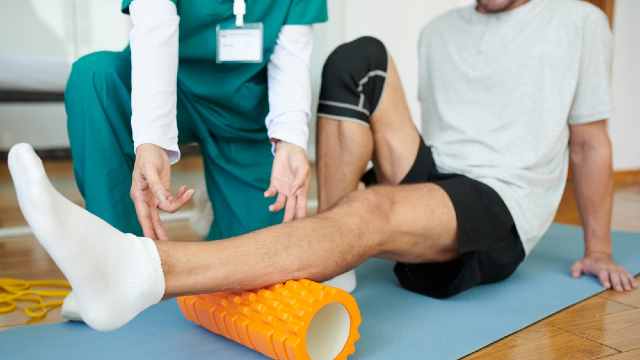
What Is Rehabilitation Medicine? A Patient's Guide
Rehabilitation medicine explained for patients new to the specialty: what it treats, how a rehabilitation physician works, and what a first assessment covers.
Learn More
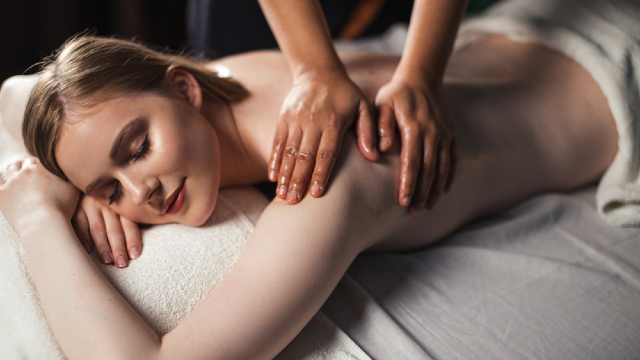
Manual Therapy vs Massage Therapy: Clinical or Wellness
Manual therapy and massage therapy both use a practitioner's hands. What separates clinically directed treatment from wellness massage, and why it matters.
Learn More