Personalized Medical Care & Dedicated International Patient Concierge

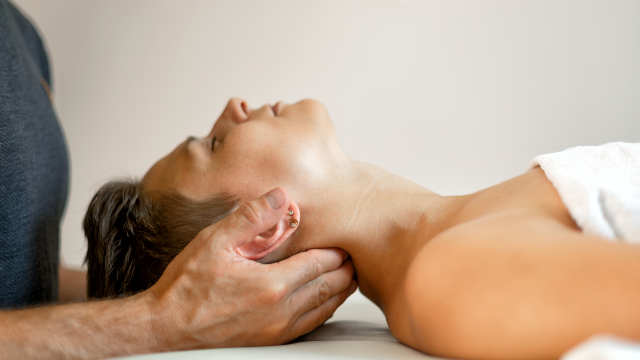
Medical Guide
What Is Rehabilitation Medicine? A Patient's Guide
Rehabilitation medicine explained for patients new to the specialty: what it treats, how a rehabilitation physician works, and what a first assessment covers.
Schedule a ConsultationWhat Is Rehabilitation Medicine? A Guide for Patients New to the Specialty
Medically reviewed by Dr. Kim DaeHwan, Director, Well Rehabilitation Clinic; Specialist in Rehabilitation Medicine
Rehabilitation medicine is the branch of medicine concerned with what a person can do, rather than only with what a scan shows. The National Library of Medicine's MedlinePlus service defines the underlying activity in terms of ability: rehabilitation, it says, is care that helps a person regain, retain or improve what they need for daily living, whether the loss is physical, mental or cognitive, and whether it followed a disease, an injury, or the side effects of medical treatment. A rehabilitation physician is the specialist who diagnoses the problem behind that loss and designs the plan for recovering it. If the specialty is unfamiliar to you, that is not unusual: most people meet it sideways, after a surgeon, an emergency room, or a primary care visit has already happened, and nobody has explained what kind of doctor they are about to see.
The idea the whole specialty is organized around
Most medical specialties are organized around an organ or a disease process. Rehabilitation medicine is organized around function — the practical business of standing up, reaching overhead, sleeping through the night, walking to a train, holding a tool for an hour without the forearm giving out.
That orientation changes the questions asked in the room. A finding on an image matters, but it matters in proportion to what it is doing to your life. Two people can carry the same finding on the same scan and need entirely different plans, because one of them lifts boxes for a living and the other does not. So a rehabilitation assessment spends a large share of its time on movement, on load, on which activities provoke and which relieve, and on what specifically you are unable to do now that you could do before.
MedlinePlus puts the goal side of this plainly: the overall aim of rehabilitation is to help you get your abilities back and regain independence, while the particular goals are set individually — shaped by the cause, by whether that cause is a passing one or a continuing one, by which abilities went, and by how much of them went. There is no default program. There is a default question, and the question is what you need to get back to.
What kinds of problems the field covers
The field is wider than most newcomers expect. MedlinePlus lists among the common reasons people need rehabilitation: injuries and trauma, including burns, fractures, traumatic brain injury and spinal cord injuries; stroke; severe infections; major surgery; side effects from medical treatments such as cancer treatment; certain birth defects and genetic disorders; developmental disabilities; and chronic pain, including back and neck pain.
Within that span, individual clinics work in defined slices. Cardiac rehabilitation and pulmonary rehabilitation are their own programs. Neurological rehabilitation after stroke or brain injury is another. Musculoskeletal rehabilitation — the spine, the joints, the muscles and tendons, and recovery after orthopedic surgery — is the slice that most patients searching for help with a painful shoulder or a stiff back are actually looking for, and it is the area Well Rehabilitation Clinic documents as its focus.
Knowing which slice a clinic works in is a practical filter. A rehabilitation medicine clinic built around spine and joint problems is not the right door for a swallowing difficulty after a stroke, and the reverse is equally true.
The name confusion, cleared up
US readers will encounter several labels for closely related territory. In the United States the specialty is usually called physical medicine and rehabilitation, and its physicians are often called physiatrists. In Korea the same specialty is generally rendered as rehabilitation medicine, and a doctor who has completed its training is described as a rehabilitation medicine specialist. Dr. Kim DaeHwan is identified in the clinic's documentation with that title.
The labels differ; the territory is the same one. What is worth checking is not the wording on the sign but whether the person you are seeing completed specialty training in this field, and what that person will personally do during your care. That is a question you can ask directly.
One further distinction confuses people often enough to name here: a rehabilitation medicine clinic and a physical therapy practice are not synonyms, and the route a patient takes into each differs. That comparison is handled in its own article on this site rather than repeated here.
What a rehabilitation physician actually does
Four things, roughly, and in this order.
Establishes what the problem is. The clinic's documented approach is that treatment planning should begin with a thorough examination and a clear diagnosis, with care then shaped around the individual's physical condition and needs. In practice that means a history, a physical and movement examination, and a review of whatever imaging or operative records exist.
Decides whether rehabilitation is the right pathway at all. This is the step patients least expect and most benefit from. The clinic's stated position is that some patients require further medical evaluation before beginning rehabilitation, particularly when symptoms suggest an acute or serious underlying condition, and that treatment should be modified, or held, when a clinician judges that the underlying problem calls for another diagnostic or medical route first. Being told "not yet, and here is why" is a clinical result.
Builds and sequences the plan. Which treatments, in what order, at what intensity, with what home component.
Reassesses and adjusts. Rehabilitation is iterative by design. The plan that begins is rarely the plan that finishes, because the response to the first weeks is itself diagnostic information.
The tools the specialty works with
Rehabilitation medicine is largely non-surgical, and it draws on a wide toolkit rather than a single signature procedure. MedlinePlus describes rehabilitation programs as typically involving a team of providers and as drawing on treatments including physical therapy for strength, mobility and fitness; occupational therapy for daily activities; treatment for pain; assistive devices; and, depending on the problem, speech-language therapy, cognitive rehabilitation, counseling, nutritional advice or vocational rehabilitation.
A musculoskeletal-focused clinic uses the relevant subset. Well Rehabilitation Clinic documents spine and joint rehabilitation, manual therapy for the spine, joints and muscles, postoperative rehabilitation, musculoskeletal pain management, extracorporeal shock wave therapy, postural rehabilitation, and postural and body alignment correction among its service categories. Each of those is a tool, not a destination; which of them appears in a given plan is a judgment made after assessment.
Where pain fits in
A large share of musculoskeletal rehabilitation is, in practice, pain care. The National Center for Complementary and Integrative Health, the NIH center covering complementary and integrative approaches, opens its pain material with the observation that pain is the most common reason people seek medical care at all.
MedlinePlus adds two points worth carrying into a first appointment. The first is that each person feels pain differently, even when the reason for the pain is the same — which is why a clinician asks you to describe it rather than inferring it from the images. The second is that long-standing pain does not stay confined to the painful part: MedlinePlus records that it reaches into mood and into relationships, and that stress and low mood feed back into the pain. A rehabilitation plan that ignores sleep, workload and stress is working with one hand tied.
How progress gets described
Because the target is function, progress is reported in functional terms. The clinic's documented approach is to evaluate response through changes in symptoms, in movement, and in the ability to carry out the activities that prompted the visit, with the plan adjusted when reassessment indicates it should be.
Two expectations are worth setting early. Change is often gradual rather than immediate. And durability depends on the diagnosis, the severity, the treatment plan, and on what you do between appointments — the home component is not an optional extra appended to the real treatment, it is a substantial part of the treatment.
What the specialty does not claim to do
Honest scoping matters more here than in most fields, because rehabilitation is often reached for after other things have disappointed.
Rehabilitation medicine does not resolve every musculoskeletal problem, and it is not a substitute for surgical care when a structural problem requires it. It is not a diagnosis-free service either: a clinic that starts treating before it has established what is wrong has skipped the step that makes the rest meaningful. And the appropriate pathway is a clinical determination, which means no article — including this one — can tell you whether rehabilitation suits your situation.
The specialty as it is practiced at this clinic
Well Rehabilitation Clinic opened in 2019 and practices rehabilitation medicine in Gangnam-gu, Seoul, stating musculoskeletal pain treatment and postoperative rehabilitation as its core areas.
Its director, Dr. Kim DaeHwan, holds specialist status in Rehabilitation Medicine in South Korea. He graduated from Hallym University College of Medicine and completed residency training in Rehabilitation Medicine at Bundang Jesaeng Hospital. His documented clinical focus areas include musculoskeletal pain management, spine and joint rehabilitation, postoperative rehabilitation, manual therapy, extracorporeal shock wave therapy, and regenerative musculoskeletal care. Three professional society memberships are recorded for him: the Korean Academy of Rehabilitation Medicine; the Korean Association of Clinical Pain; and, reflecting the diagnostic side of the specialty, the Korean Society of Electromyography and Electrodiagnostic Medicine.
Background on the clinic and its director is set out on the About Us page.
What to ask before you commit to a specialty you have just met
- What is my diagnosis, in words, and what is it based on?
- Why is rehabilitation the right pathway for this rather than something else?
- Who will personally carry out the treatment?
- What am I expected to do between appointments?
- What would tell us, and by when, that this approach is not working?
- What happens if the assessment suggests I need a different kind of care?
MedlinePlus's guidance on choosing a doctor or health care service is a reasonable companion to that list; it names practical considerations such as whether a service is accredited, where it is located, what hours it keeps, and whether the provider's manner suits you, and it points to official directories for checking a physician's licensure.
If you want to put a specific problem in front of a rehabilitation physician, the clinic's contact page is where an inquiry is sent. The clinic keeps weekday hours, with a lunch break in the early afternoon, and is closed on weekends and public holidays.
The Bottom Line
- Rehabilitation medicine is organized around function — what you are able to do — rather than around a single organ or disease.
- MedlinePlus defines rehabilitation as care that helps you get back, keep, or improve abilities needed for daily life, with goals set individually.
- The field spans stroke, trauma, major surgery, chronic pain and more; musculoskeletal rehabilitation is the slice covering the spine, joints, muscles and recovery after orthopedic surgery.
- A rehabilitation physician establishes the diagnosis, decides whether rehabilitation is the right pathway, builds the plan, and reassesses it.
- Deciding that rehabilitation is not the right next step is itself a clinical outcome, not a refusal.
Frequently Asked Questions
Is a rehabilitation physician the same thing as a physical therapist?
No. They are different professions with different training and different roles, and in a rehabilitation medicine clinic they work within one plan rather than in competition. A rehabilitation physician is a medical doctor who has completed specialty training in this field and who makes the diagnosis and sets the plan.
What conditions does rehabilitation medicine treat?
The field as a whole covers recovery of lost abilities after trauma, stroke, severe infection, major surgery, treatment side effects, developmental conditions and chronic pain. Individual clinics work in defined areas of that span. Well Rehabilitation Clinic documents musculoskeletal pain treatment and postoperative rehabilitation as its core areas.
Do I need a referral to see a rehabilitation physician?
Referral requirements depend on the health system you are in and on any coverage arrangements you hold. The clinic's own inquiry route is its contact page, and whether an assessment is appropriate for your situation is confirmed through consultation rather than in advance.
What happens at a first rehabilitation appointment?
The clinic's documented consultation reviews your symptoms, medical history, functional limitations, previous treatment, and any relevant imaging or surgical records, alongside an examination of movement. An individualized plan is recommended after that assessment rather than before it.
Is rehabilitation treatment painful, and does it involve anesthesia?
Most non-invasive rehabilitation treatments do not require anesthesia, because nothing is cut or injected. Comfort during treatment varies by technique and by the individual's condition, and intensity is set according to what the clinical situation calls for. A separate article on this site covers what hands-on treatment feels like in detail.
How long does rehabilitation take?
It depends on the diagnosis, the severity, the treatment selected and your own participation, and it is confirmed after assessment rather than quoted in advance. The clinic's position is that progress is judged by reassessment rather than by a fixed calendar.
What if rehabilitation turns out not to be the right approach for me?
That is a legitimate result of an assessment. Some patients need further medical evaluation before rehabilitation begins, especially when symptoms point to an acute or serious underlying condition, and the clinic's stated position is that treatment should be modified or postponed in those circumstances.
How do I check that a clinic is what it says it is?
Look at the clinician's specialty training and the clinic's documented scope of services, and use official licensure directories where your own country provides them. MedlinePlus maintains guidance on choosing a doctor or health care service that names the practical factors worth weighing. Patient-facing material from this clinic is collected on its customer reviews page.
This article is for general informational purposes and does not constitute individualized medical advice. It is not a self-diagnosis tool. Rehabilitation candidacy, technique, and expected outcomes can only be determined through a consultation with a qualified rehabilitation physician.
More Articles
Continue reading our clinical guides.
Postural Correction in Korea: How It Works, Who It Helps
Postural correction in Korea starts with a clinical assessment. Learn what an evaluation covers, who benefits, what the evidence supports, and what to ask.
Learn More
What Is Rehabilitation Medicine? A Patient's Guide
Rehabilitation medicine explained for patients new to the specialty: what it treats, how a rehabilitation physician works, and what a first assessment covers.
Learn More
Manual Therapy vs Massage Therapy: Clinical or Wellness
Manual therapy and massage therapy both use a practitioner's hands. What separates clinically directed treatment from wellness massage, and why it matters.
Learn More