Specialized Rehabilitation & Pain Care in Gangnam, Seoul · Dedicated International Concierge

Medical Guide
What Is Manual Therapy? A Guide to Hands-On Care
A plain introduction to manual therapy: what hands-on rehabilitation is, which techniques it covers, who delivers it, and who needs assessment first.
Schedule a ConsultationWhat Is Manual Therapy? A Patient's Guide to Hands-On Rehabilitation
Medically reviewed by Dr. Kim DaeHwan, Director, Well Rehabilitation Clinic; Specialist in Rehabilitation Medicine
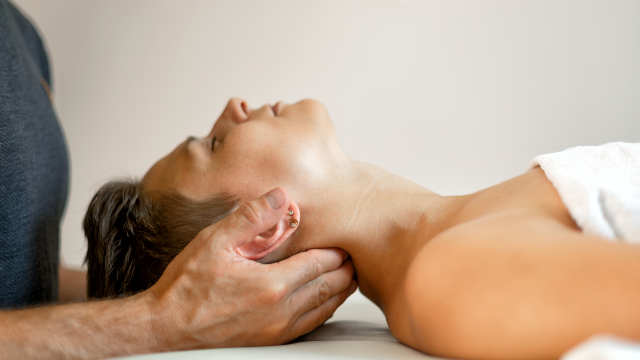
Manual therapy is rehabilitation treatment delivered through a clinician's hands rather than through a device, a needle or a scalpel. Well Rehabilitation Clinic documents Manual Therapy for Spine & Joints as non-surgical care given by hand under a clinician's direction, sitting inside a musculoskeletal rehabilitation plan that is shaped by what the patient reports, what the examination finds, which movements are restricted, and what recovery is meant to achieve. If you have encountered the term and cannot tell whether it refers to something medical, something therapeutic or something closer to a spa treatment, this article is the plain answer.
The definition, without jargon
Three elements together make something manual therapy in a clinical sense.
It is hands-on: the clinician's hands are the instrument, applying force, movement or sustained pressure to a joint, a muscle or the tissue around it.
It is clinician-guided: the techniques are selected, not applied from a fixed routine. The clinic's documented process puts assessment first — the painful or restricted area is examined, and only then are hands-on techniques picked to match the condition in front of the clinician and the goals of that person's rehabilitation.
It is part of a plan: manual therapy is a component of a rehabilitation program with an objective, not a standalone service you buy by the hour on the strength of how it feels.
Remove any of the three and you have something else — possibly something perfectly pleasant, but not the thing this article describes.
What the techniques actually are
Hands-on rehabilitation covers a family of approaches rather than one procedure. Broadly, clinicians work on joints, on muscle and the tissue around it, and on movement itself.
Joint techniques apply graded, controlled movement to a joint to address restriction — the clinician moving the joint rather than the patient doing so.
Soft-tissue techniques address muscle and surrounding tissue through sustained or rhythmic pressure, with the aim of reducing tension and improving how tissue tolerates movement.
Stretching and assisted movement lengthen structures the patient cannot effectively reach alone, often at the end of a joint's available range.
Movement retraining with hands-on guidance, in which the clinician's contact cues a different pattern rather than forcing a position.
Which of these appears in a given session follows from the assessment. Well Rehabilitation Clinic offers manual therapy in defined session options, and the number recommended and the structure of a program are confirmed after assessment rather than set in advance; the practical detail of what a session contains is covered in the clinic's dedicated manual therapy guide.
What manual therapy is aimed at
The clinic's documented account of benefits is specific and appropriately hedged: manual therapy may reduce pain and stiffness, improve joint mobility, decrease muscle tension, and make everyday movement more comfortable.
Read that carefully and notice the shape of it. The targets are symptoms and movement — stiffness, mobility, tension, comfort in daily activity. They are not structural claims. Hands-on treatment is not presented here as remodeling anatomy, and a clinic that describes it that way is going further than the documentation supports.
The clinic's documented candidacy follows the same logic: manual therapy may be appropriate for patients with musculoskeletal pain, stiffness, reduced range of motion, or movement-related limitations involving the spine or joints.
Where hands-on treatment sits in the wider picture of care
Manual therapy is one option among several for musculoskeletal problems, and it is not usually the whole plan.
MedlinePlus, the patient education service of the US National Library of Medicine, sets out the general landscape for back pain: treatment depends on the kind of pain and its cause, and the options range across hot or cold packs, exercise, medicines, injections, complementary treatments and, in some cases, surgery. Hands-on approaches sit within that range rather than above it.
MedlinePlus's account of rotator cuff care shows the same structure from the shoulder's side — rest, cold, pain relievers, and physical therapy to strengthen the shoulder and improve movement, with further options considered when those have not helped. The NIH's National Center for Complementary and Integrative Health frames the demand side simply: nothing sends more people to a doctor than pain, which is why so many approaches compete over the same territory.
The realistic position is that hands-on work often makes movement more available, and that graded exercise and habit change are usually what make the gain hold. MedlinePlus adds a caution worth carrying into any long-running problem: each person feels pain differently even when the reason for the pain is the same, and stress and low mood can make persistent pain worse.
What manual therapy is not
Four distinctions come up constantly, and each is handled at length elsewhere on this site. Stated briefly:
It is not massage. The two overlap in that both are delivered by hand, but they differ in purpose, in the assessment that precedes them, and in the clinical framework they sit inside. NCCIH maintains patient material on massage therapy for those comparing them, and a dedicated article on this site sets out the distinction.
It is not a synonym for physical therapy. The relationship between the two terms — and the way the labels differ between the United States and Korea — is covered in its own article rather than repeated here.
It is not a chiropractic adjustment. Different profession, different framework; that comparison has its own article too.
It is not an alternative to surgery in the general case. Whether a problem is a conservative-care problem or a surgical one is a clinical determination, and the article on that decision addresses it directly.
How a clinician decides whether it belongs in your plan
The clinic's documented consultation for manual therapy reviews symptoms, medical history, functional limitations, previous treatment, and any relevant imaging or surgical records. From that, the clinician is answering three questions in sequence.
First, what is the problem? Hands-on treatment applied to an undiagnosed complaint is a guess with a good bedside manner.
Second, is rehabilitation the right pathway at all, or does something need investigating first? The clinic's documented position is that hands-on treatment can be the wrong choice where the symptom picture points toward an acute or serious medical problem — one that needs diagnostic work, or a different kind of treatment, before anything else — and that contraindications are identified at the initial consultation.
Third, if it is appropriate, which techniques, at what intensity, and alongside what else? This is where manual therapy stops being a product and becomes a clinical decision.
Who should hold off
Some situations call for assessment before any hands-on treatment is arranged.
MedlinePlus advises contacting a provider when back pain is severe or has not improved after three days, and seeking medical attention when the pain followed an injury. It advises seeing a provider as soon as possible if an arm feels weak immediately after a sudden shoulder injury. More generally, new neurological symptoms — numbness, tingling, weakness — pain that wakes you at night, and pain accompanied by fever or unexplained weight loss are reasons for medical evaluation first.
Telling the clinician about your health conditions and the medicines you take matters for the same reason. Existing health problems can change which techniques are suitable, and that information has to arrive before the treatment does, not after.
What surrounds a session
Manual therapy is generally performed without anesthesia, because nothing is cut, injected or numbed. Recovery after a session usually does not involve downtime, and the clinic's documented position is that most patients continue daily activities as tolerated, with a return to exercise or heavier activity following the clinician's guidance and the individual's condition. What the treatment feels like in detail — and what to say if something is uncomfortable — is the subject of a separate article on this site, which is worth reading before a first appointment.
The clinic's documented aftercare for this service may include activity guidance, home exercises, stretching, posture advice, or other rehabilitation instructions, with patients monitoring how symptoms respond and returning for reassessment if recommended. That home component is not incidental. It is the part that tends to determine whether a change in movement persists.
How results are judged
The clinic documents that results from manual therapy may appear gradually or after the first few sessions, and are assessed through changes in pain, mobility, range of motion, function and daily activity. How long any benefit lasts is documented as varying with the condition, how long symptoms have been present, activity level, treatment frequency, and adherence to the recommended plan.
Two expectations follow. A single session is not a fair test of an approach, and a program that produces a change but is not followed by anything else is unlikely to hold that change against the same daily loading that produced the problem.
Manual therapy at this clinic
Well Rehabilitation Clinic is a rehabilitation medicine clinic in Gangnam-gu, Seoul, which lists Manual Therapy for Spine & Joints & Muscles among its documented service categories and identifies manual therapy as one of its top procedures for this market.
Dr. Kim DaeHwan, the clinic's director, is a Rehabilitation Medicine specialist in South Korea. He completed clinical training at Hallym University Kangdong Sacred Heart Hospital before residency training in Rehabilitation Medicine, and his documented clinical focus areas include manual therapy, musculoskeletal pain management, and spine and joint rehabilitation.
Whether manual therapy suits your situation is decided through consultation rather than in advance. To put a question to the clinic in writing, use its contact page; the About Us page covers the practice and its director. The clinic sees patients on weekdays only.
The Bottom Line
- Manual therapy is hands-on rehabilitation treatment: clinician-delivered, selected after assessment, and used inside a broader plan.
- Well Rehabilitation Clinic documents its aims as reduced pain and stiffness, improved joint mobility, decreased muscle tension, and greater comfort in everyday movement.
- It is distinct from massage, from physical therapy as a whole, and from chiropractic care; each comparison has its own article on this site.
- It is generally performed without anesthesia and usually involves no downtime, with activity resumed as tolerated.
- It may not be appropriate when symptoms suggest an acute or serious condition needing evaluation first, which is what the initial consultation is for.
Frequently Asked Questions
What exactly does manual therapy mean?
It means rehabilitation treatment applied with a clinician's hands — moving a joint, working on muscle and surrounding tissue, assisting a stretch, or guiding a movement pattern. The clinic documents it as non-surgical care given by hand under a clinician's direction, inside a rehabilitation plan written for the person.
Who is qualified to deliver it?
Hands-on techniques are used by more than one profession, which is part of why the term confuses people. What matters for a patient is who assessed you, what training that person completed, and who will personally carry out the treatment. Those are fair questions to ask before booking.
What conditions is it used for?
The clinic documents candidacy as musculoskeletal pain, stiffness, reduced range of motion, or movement-related limitations involving the spine or joints. Whether your particular problem fits that description is confirmed by examination.
Does it require anesthesia?
No. Manual therapy is non-invasive and is generally performed without anesthesia, because nothing is cut, injected or numbed.
Will I need time off afterward?
Usually not. The clinic documents that recovery after manual therapy does not typically involve downtime and that most patients continue daily activities as tolerated, with a return to exercise or heavier activity guided by the clinician and the individual's condition.
How quickly might I notice a change?
The clinic documents that results may appear gradually or after the first few sessions, and are judged by changes in pain, mobility, range of motion, function and daily activity. Durability varies with the condition, how long symptoms have lasted, activity level and adherence to the plan.
Is manual therapy just a medical-sounding word for massage?
No. Both are delivered by hand, but they differ in purpose, in the assessment that precedes them and in the framework they sit inside. A dedicated article on this site sets out that comparison in full, and NCCIH publishes patient material on massage therapy separately.
How do I find out whether it is right for me?
Through a consultation that reviews your symptoms, history, functional limitations, prior treatment and any imaging. Any contraindications are identified at that appointment. Patient-facing material from the clinic is collected on its customer reviews page.
This article is for general informational purposes and does not constitute individualized medical advice. It is not a self-diagnosis tool. Rehabilitation candidacy, technique, and expected outcomes can only be determined through a consultation with a qualified rehabilitation physician.
More Articles
Continue reading educational guides from Well Rehabilitation Clinic.
Chronic Tendon Pain Explained: When ESWT May Help
What chronic tendon pain is, why tendons are slow to settle, what conservative care comes first, and where extracorporeal shock wave therapy fits in the plan.
Learn More

Is Manual Therapy Painful? What a Session Feels Like
Is manual therapy painful? What hands-on treatment usually feels like, how the intensity is set, and what to tell your clinician before and during a session.
Learn More
When Musculoskeletal Pain Needs a Specialist Assessment
The patient-side thresholds that move a musculoskeletal problem from self-care to a rehabilitation medicine assessment, and how to judge if yours apply.
Learn More