Specialized Rehabilitation & Pain Care in Gangnam, Seoul · Dedicated International Concierge


Medical Guide
Understanding Musculoskeletal Pain: Causes and Options
What musculoskeletal pain is, where it comes from, which symptoms call for evaluation, and what the non-surgical treatment categories actually contain.
Schedule a ConsultationUnderstanding Musculoskeletal Pain: Causes and Options
Medically reviewed by Dr. Kim DaeHwan, Director, Well Rehabilitation Clinic; Specialist in Rehabilitation Medicine
Musculoskeletal pain is pain arising from the muscles, joints, tendons, ligaments and the structures around them, and most of it is managed without an operation. This article is a map rather than a manual: what the category contains, which broad mechanisms produce it, which symptoms mean it should be looked at by a clinician, and what the non-surgical options are as categories — with links onward to the guides that go into each one properly.
Few complaints bring people to a doctor more often than pain, a point the National Center for Complementary and Integrative Health — part of the US National Institutes of Health — makes in its own overview of the subject, and a large share of that pain belongs to this category.
It is written for the reader at the beginning of the process, who has had something hurt for long enough to start reading about it and who wants to know what kind of problem they are dealing with before choosing what to do about it.
What the category covers
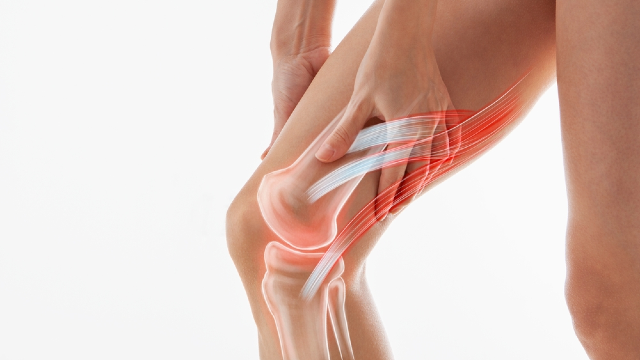
The term is broader than most people assume. It takes in the muscles themselves, the tendons that attach them to bone, the ligaments that hold joints together, the joints and their surfaces, and the soft tissue in between. Pain from any of those, anywhere in the body, is musculoskeletal.
That breadth is why the category alone is not a diagnosis. Knowing that a shoulder problem is musculoskeletal narrows the field from "everything" to "a great deal," and no further. The work of saying what specifically is producing it is a separate step, and it is the step everything else depends on.
Two properties distinguish this kind of pain from most other kinds, and both are practically useful. It is usually mechanical, meaning it changes with position, load and movement — it has things that make it worse and things that relieve it. And it is usually local in origin even when it is felt elsewhere, which is why where it hurts and where the problem is are not always the same place.
Where it comes from
Most cases fall into a small number of broad origins, and they are not mutually exclusive.
Load that outruns capacity. The commonest pattern of all. A tissue is asked to do more than it is currently conditioned to do — through repetition, a sudden increase in activity, an unfamiliar task, or a sustained posture held for hours a day — and becomes painful. Nothing dramatic has happened, which is exactly why people struggle to date the onset.
Injury. A fall, a twist, a collision, a lift that went wrong. Here the onset is datable and the story is clear, though the story can still be misleading about which structure took the damage.
Age-related change in the tissue. Joints, discs and tendons change with time. Such change is extremely common and is not by itself a verdict: imaging findings of this kind are frequently present in people with no symptoms at all, which is one reason a scan is read against an examination rather than in place of one.
Pain after an operation. Surgery is itself an injury, deliberately made, and recovery from it has its own course. MedlinePlus, the US National Library of Medicine's patient education service, notes that a degree of pain, swelling and soreness around the site the surgeon worked on is ordinary afterward, and that a surgeon can say which side effects to expect.
Pain referred from somewhere else. Structures in the neck can produce arm symptoms; structures in the low back can produce leg symptoms. The location of the sensation is a clue, not an address.
No clear cause. This happens, and it is worth knowing in advance that it happens. MedlinePlus is explicit that pain can become persistent without an identifiable ongoing cause, and that the absence of one does not make the pain less real or less treatable.
Short-lived and long-running pain behave differently
Pain that comes on suddenly and resolves as the cause heals is doing what pain is for: it is a signal that something needs attention. Pain that persists after the tissue has had time to settle is a different problem, and treating the second as though it were simply a longer version of the first is where a lot of frustration comes from.
MedlinePlus describes persistent pain as something that can occur most days or every day and can affect all aspects of daily life, including mood and relationships. It adds two points that matter for expectation-setting. Treatment may not remove such pain entirely, but it can help with the symptoms. And environmental and psychological factors — stress and mood among them — can make it worse, which is not a suggestion that the pain is imaginary but a statement about how the system that produces it works.
There is a second asymmetry worth knowing. Two people can have the same underlying problem and describe very different experiences, because, as MedlinePlus puts it, each person feels pain differently even when the reason for it is the same. That is one of the reasons a clinician asks about function and activity rather than only about intensity.
The symptoms that travel with it
Pain rarely arrives alone, and the companions are worth mentioning to a clinician rather than treating as separate complaints.
Sleep is the commonest. Pain that interrupts sleep produces tiredness, and tiredness lowers tolerance for pain, which is a loop rather than a coincidence. Fatigue, low mood and irritability are all documented alongside persistent pain, and MedlinePlus notes that depression or stress can make it worse.
Stiffness and reduced range of movement often matter more than the pain itself for daily life. So does the accommodation people make without noticing: the arm that stops being used overhead, the sleeping position abandoned, the exercise quietly dropped. Those adaptations are useful information, because they describe the functional loss that any treatment plan will be aimed at reversing.
Describing it usefully
The most valuable thing a patient brings to a first consultation is not a pain score. It is a description with structure.
Four elements make a description clinically useful: where the pain is and whether it travels; how long it has been present and how it began, if there was a beginning; what reliably makes it worse and what relieves it; and what you can no longer do that you could do before. The last is the one most often left out, and it is the one rehabilitation care is organized around.
MedlinePlus frames rehabilitation around abilities rather than around symptoms: recovering them, keeping them, improving them, with targets set for the individual instead of against a population average. Targets of that kind need a starting point recorded in the same currency — which is to say, in abilities rather than in numbers out of ten.
When it should be looked at rather than managed at home
Most musculoskeletal pain settles with time and sensible self-management. Some should be assessed, and the thresholds are not subtle.
MedlinePlus gives clear ones for back pain, and they generalize reasonably well: contact a health care provider if the pain is severe, if it has not improved after three days, or if it follows an injury. Pain that arrives after significant trauma belongs in the same category.
Beyond those, seek an assessment for pain accompanied by weakness, numbness or pins and needles; for a joint that is hot, swollen or cannot be moved; for pain that wakes you consistently at night or is unrelated to position and activity; and for symptoms accompanied by fever, unexplained weight loss or feeling generally unwell. None of those is a diagnosis in itself. They are patterns that mean the question is bigger than a sore muscle, and the point of the list is to get it answered by someone qualified to answer it.
One general caution is worth adding for anyone managing a painful back. MedlinePlus notes that while rest can help, staying in bed for more than a day or two tends to make back pain worse rather than better.
How a clinician works out what is causing it
The process is less mysterious than it looks, and knowing its shape makes it easier to take part in.
MedlinePlus describes the standard sequence for pain of unclear cause: a review of your medical history, a description from you of the pain and how it affects your life, a physical examination, and blood tests or other tests where they are needed. Imaging enters that sequence as a tool used to answer a specific question, rather than as a default first step, and it is interpreted against what the examination found.
Well Rehabilitation Clinic, a rehabilitation medicine practice in Gangnam-gu, Seoul, that has focused on musculoskeletal pain treatment and postoperative rehabilitation since opening in 2019, describes its own approach the same way: care begins with clinical assessment to identify the painful area and to determine whether its treatments are appropriate at all, with the treatment plan built from the patient's physical condition. The second half of that — determining whether its own treatments are appropriate — is the part patients should listen for, because an assessment that can conclude "not here" is doing clinical work rather than intake.
What non-surgical treatment actually covers
"Non-surgical" is a negative definition covering a wide positive field. Broadly, it contains these categories.
Movement and rehabilitation. Graded activity, strengthening, mobility work and movement retraining, prescribed and progressed rather than handed over as a leaflet. This is the backbone of most musculoskeletal care, partly because it addresses capacity rather than only symptoms.
Hands-on treatment. Clinician-delivered techniques applied to joints and soft tissue, used as part of a plan rather than as a standalone service. Well Rehabilitation Clinic offers manual therapy for the spine, joints and muscles in this category.
Medicines. Pain relievers and other drug treatments, which MedlinePlus lists among the standard options alongside non-drug approaches.
Energy-based treatment applied from outside the body. Extracorporeal shock wave therapy is the example most relevant here; the clinic provides focused and radial shock wave therapy as part of its musculoskeletal pain management services.
Injection treatments. These sit at the more invasive end of the non-surgical range and carry their own procedural considerations. The clinic offers platelet-rich plasma therapy for a defined set of treatment areas.
Posture and alignment work. Programs aimed at how the body is habitually loaded, rather than at the painful spot alone.
Everyday measures. MedlinePlus lists lifestyle changes among the things a provider may recommend for persistent pain, including managing stress, maintaining a healthy weight, and adding low-impact exercise. These are unglamorous and they are not filler.
Each of those has its own guide, and this article deliberately does not re-explain them. What matters at this stage is knowing that the field is wide, that the categories do different jobs, and that choosing among them is a clinical decision made after an examination rather than a shopping decision made before one.
What non-surgical care is aiming at
Expectations are where most disappointment in this field originates, so it is worth being plain.
The realistic goals are reduced discomfort, better movement and range of motion, improved strength and physical function, and greater ease in daily activities. Those are the outcomes Well Rehabilitation Clinic describes for its musculoskeletal work, and they are stated in terms of function for a reason: function is what can be measured, compared and improved.
What no responsible clinic will promise is an outcome. Timelines and durability vary with the diagnosis, the severity, the plan and the patient's own activity habits, and persistent pain in particular is not always removable — MedlinePlus says so directly while noting that treatment can still help substantially with symptoms. A plan that reduces pain from constant to occasional and restores a lost activity is a good result, even if it is not a silent one.
Where surgery fits
Surgery has a definite place in musculoskeletal care, and the boundary is usually drawn by what the examination and investigations find rather than by how long non-surgical treatment has been tried.
Certain findings point toward surgical assessment more or less immediately. Most do not, and the ordinary sequence is to address the problem conservatively and to revisit if it does not respond. Rehabilitation also does not disappear if an operation happens: recovery afterward is a structured process in its own right, and the clinic's postoperative rehabilitation service exists for exactly that stage.
Taking the next step
If your pain meets any of the thresholds above, the useful next move is an assessment rather than more reading. Bring what you already have — a clear account of onset and pattern, what you have tried and what it did, and any imaging or operative records — and be ready to describe what you can no longer do.
Well Rehabilitation Clinic sets out its background and the range of services a plan might draw on under About Us, and inquiries for this market go through its contact page.
The Bottom Line
- Musculoskeletal pain covers muscles, joints, tendons, ligaments and surrounding soft tissue, and the category is a starting point for investigation rather than a diagnosis.
- Most cases arise from load exceeding current capacity, from injury, from age-related tissue change, from surgery, or from a structure elsewhere referring symptoms — and some have no identifiable ongoing cause.
- Have pain assessed if it is severe, has not improved after three days, follows an injury, or comes with weakness, numbness, a hot or immovable joint, night pain, fever or unexplained weight loss.
- Non-surgical care is a wide field — movement and rehabilitation, hands-on treatment, medicines, shock wave treatment, injection therapies, postural work and everyday measures — and the choice among them follows an examination.
- Realistic goals are stated in function: less discomfort, better movement, more strength, easier daily activities. Timelines and durability vary by diagnosis, severity, plan and habits.
Frequently Asked Questions
What exactly counts as musculoskeletal pain?
Pain originating in muscles, joints, tendons, ligaments or the soft tissue around them, anywhere in the body. It typically varies with position, load and movement, which is one of the features that distinguishes it from pain arising in other systems.
Does an abnormal scan explain my pain?
Not on its own. Age-related changes in joints, discs and tendons are common and are frequently present in people without symptoms, which is why imaging is read against the examination findings rather than treated as the answer by itself.
Why does my pain move around or show up away from the problem?
Because structures can refer symptoms elsewhere — the neck into the arm, the low back into the leg. Where you feel it is a clue rather than an address, and sorting out the difference is an examination task.
When should I stop managing it myself and get it looked at?
If it is severe, if it has not improved after three days, or if it followed an injury. Also if it comes with weakness, numbness, a hot or swollen joint, consistent night pain, fever or unexplained weight loss.
Is non-surgical treatment just a delay before surgery?
No. Conservative care is the usual first approach for most musculoskeletal problems, and the decision to consider surgery is generally driven by what the examination and investigations find rather than by elapsed time.
What will a first consultation involve?
A review of your history, your own description of the pain and its effect on daily life, a physical examination, and further tests where the cause is not clear. At Well Rehabilitation Clinic the assessment also determines whether its own treatments are appropriate for your case.
Can pain be treated when nobody can find a cause?
Often, yes. MedlinePlus notes that persistent pain sometimes has no clear cause and that treatment, while it may not eliminate the pain, can still help with the symptoms. Care in that situation is aimed at function and daily life.
What counts as a good outcome?
Usually something stated in abilities rather than in pain scores: sleeping through the night, lifting a bag, sitting through a working day, returning to an activity you had given up. Ask at the start which of those your plan is being judged against.
This article is for general informational purposes and does not constitute individualized medical advice. It is not a self-diagnosis tool. Rehabilitation candidacy, technique, and expected outcomes can only be determined through a consultation with a qualified rehabilitation physician.
More Articles
Continue reading educational guides from Well Rehabilitation Clinic.
Chronic Tendon Pain Explained: When ESWT May Help
What chronic tendon pain is, why tendons are slow to settle, what conservative care comes first, and where extracorporeal shock wave therapy fits in the plan.
Learn More

Is Manual Therapy Painful? What a Session Feels Like
Is manual therapy painful? What hands-on treatment usually feels like, how the intensity is set, and what to tell your clinician before and during a session.
Learn More

When Musculoskeletal Pain Needs a Specialist Assessment
The patient-side thresholds that move a musculoskeletal problem from self-care to a rehabilitation medicine assessment, and how to judge if yours apply.
Learn More