Specialized Rehabilitation & Pain Care in Gangnam, Seoul · Dedicated International Concierge

Medical Guide
Posture and Pain: How Alignment Affects Your Joints
How posture and body alignment influence musculoskeletal load and discomfort, what the evidence honestly supports, and what an alignment assessment looks at.
Schedule a ConsultationPosture and Pain: How Body Alignment Affects Musculoskeletal Health
Medically reviewed by Dr. Kim DaeHwan, Director, Well Rehabilitation Clinic; Specialist in Rehabilitation Medicine
Posture affects musculoskeletal health mainly through load — how force is distributed across joints, muscles and tendons, and for how long. It is not a moral quality, and it is not a single correct position that a person either holds or fails to hold. The more useful way to think about alignment is as a description of how your body habitually organizes itself against gravity and through movement, and of what that organization asks of particular tissues over the course of a day. This article explains that relationship honestly, including where the evidence stops.
What posture actually is
Ask most people to demonstrate good posture and they will straighten up, pull their shoulders back, and hold it for about four seconds. That demonstration contains the misunderstanding.
Posture is not a pose. It is the aggregate of the positions your body adopts and the transitions between them across a working day — how you sit at a desk for three hours, how you stand while waiting, how you carry a bag, how you sleep, and how frequently you change any of it. A position that is unremarkable for two minutes can become a problem at ninety, and that is a statement about duration and load rather than about the position itself.
This is why the most consistent finding in the practical literature is not about a particular alignment but about variation. Sustained anything is the harder ask.
Load is the link between alignment and symptoms
Alignment matters because it determines the lever arms through which force acts. Move a joint away from the position where the surrounding muscles work most efficiently, and either the muscles work harder to hold it, or passive structures take up the difference, or both.
The clinical reference literature supports this connection in the specific case of tendon problems. StatPearls, the peer-reviewed clinical reference hosted on the NIH's National Center for Biotechnology Information Bookshelf, lists body mechanics, muscle imbalances and flexibility among the factors influencing tendon loading and stress, alongside systemic factors such as body mass index and nutrition. It also names repetitive strain as a common initiating insult, and recommends, in its patient education section, limiting repetitive workplace movements, warming up before exercise, avoiding prolonged inactivity, and working on muscle strength and general fitness.
That is the honest mechanism, and it is a mechanical one: alignment and movement habits change what gets loaded, how much, and how often.
Where posture sits among the causes of pain — stated honestly
Posture is a contributing factor in musculoskeletal discomfort. It is rarely the whole explanation, and content that presents it as the single cause of pain is overselling it.
Back pain is the clearest illustration. MedlinePlus, the patient education service of the US National Library of Medicine, describes back pain as one of the most common medical problems, affecting eight out of ten people at some point in life, with pain ranging from a dull constant ache to a sudden sharp pain. It also notes that most back pain goes away on its own, though it may take a while. A problem that common, and that often self-limiting, does not have one tidy cause.
MedlinePlus's own prevention material for back pain does name posture and ergonomics alongside strengthening exercise, so posture is genuinely on the list. It is one entry on a list that also includes load, conditioning, general health and time.
Two further points belong here. MedlinePlus notes that resting can help but that staying in bed for more than a day or two can make back pain worse — so the answer to a posture-related ache is rarely immobility. And on long-standing pain it observes that each person feels pain differently even when the reason is the same, and that stress and low mood can make chronic pain worse. Posture is one input into a system with several.
The habits that change loading most
In practice, a handful of daily patterns account for most of what an alignment assessment finds:
- Sustained desk and screen work, particularly where the screen height, chair and desk force the head and arms into one position for long stretches.
- Asymmetric carrying — a bag on one shoulder, a child on one hip, a tool held in one hand for hours.
- Repetitive occupational movement. MedlinePlus's account of rotator cuff injuries is instructive: most are wear-and-tear injuries from doing the same arm movements over and over, especially overhead, and it names carpenters, construction workers and painters among the groups affected.
- Prolonged stillness of any kind, which the tendon literature explicitly warns against.
- Sleep positions and surfaces, which govern eight hours of loading nobody is awake to adjust.
- Deconditioning, which is not a posture problem as such but changes how long any position can be held before something starts to complain.\n\n### Why "sit up straight" is not the intervention
Telling someone to sit up straight gives them a target they cannot sustain and no way to make it easier to sustain. It also treats the symptom of an alignment pattern as if it were the cause.
Rehabilitation approaches to posture work on capability rather than compliance: on the mobility to reach a position comfortably, the strength and endurance to maintain it without strain, the awareness to notice when you have left it, and the environmental changes that stop making the position expensive in the first place. Well Rehabilitation Clinic describes its postural rehabilitation as a personalized program addressing posture, movement patterns, muscle balance, flexibility and functional alignment, which may combine therapeutic exercise, movement retraining, stretching and manual techniques.
Home carryover matters disproportionately here, because the thing being changed is a habit that operates for sixteen hours a day. The clinic's documented aftercare for this service is consistent with that: following recommended exercises, maintaining healthy movement habits, and attending follow-up assessments when advised.
What an alignment assessment looks at
Well Rehabilitation Clinic documents Postural & Body Alignment Correction as one of its service categories, describing it as a non-surgical approach to improving posture, body alignment and movement patterns, which may use manual techniques, stretching, strengthening and corrective exercise. Its documented consultation for this service evaluates posture, body alignment, movement patterns, symptoms and functional limitations.
Translated into what actually happens in the room, an assessment of this kind is generally looking at:
- How you stand and sit when you are not thinking about it.
- What movement is available at the relevant joints, and where it is restricted.
- Which movements reproduce your symptoms, and which relieve them.
- What you do repeatedly — at work, in training, at home.
- What you are unable to do now that you want to be able to do.
The clinic's documented process begins with this evaluation rather than with a technique, which is the part worth insisting on wherever you are treated.
What alignment work can and cannot be expected to do
The clinic's own language for this service is carefully bounded, and repeating it accurately is more useful than dressing it up. Postural & Body Alignment Correction is documented as aiming to support three things — awareness of how you move, comfort in ordinary function, and more efficient mechanics — and the same documentation attaches three variables to the result: the condition itself, what the person does daily, and how much they take part. Its postural rehabilitation service is described in similar terms — supporting improved body awareness, movement efficiency and functional comfort.
Note what that language does not say. It does not promise resolution of any named diagnosis. It does not claim to change a structural condition. And it makes participation an explicit variable, because a program aimed at habits depends on what happens between appointments.
The clinic's documented candidacy for this service is patients experiencing posture-related discomfort, movement imbalance, muscle tension or functional limitations, and its documented exclusion is that patients whose symptoms need evaluation or treatment outside rehabilitation care may require additional assessment first.
Symptoms that need a clinician before a posture program
Not every ache that looks postural is postural, and this is the point at which self-diagnosis becomes expensive.
MedlinePlus advises calling a provider if back pain is severe or has not improved after three days, and seeking medical attention when back pain followed an injury. It also advises seeing a provider as soon as possible if your arm feels weak immediately after a sudden shoulder injury. More broadly, symptoms including numbness, tingling, weakness, or pain that wakes you, spreads down a limb, or arrives with fever or unexplained weight loss are reasons for medical assessment rather than for a corrective exercise plan.
The NIH's National Center for Complementary and Integrative Health records that pain brings more people to medical care than anything else — which also makes it the symptom most often assumed to be understood before anyone has examined it.
How this fits alongside other approaches
Postural work is one member of a family of approaches to musculoskeletal discomfort, and it is not in competition with the rest of a rehabilitation plan. It frequently sits alongside hands-on treatment, graded exercise, and whatever else the diagnosis calls for.
Readers comparing this approach with chiropractic care will find that comparison handled in its own article on this site, and the clinic's postural program is described in fuller detail in another. This article is the layer underneath both: what posture has to do with pain in the first place.
Where this sits at the clinic
Well Rehabilitation Clinic is a rehabilitation medicine clinic in Gangnam-gu, Seoul, which lists both Postural Rehabilitation and Postural & Body Alignment Correction among its documented service categories.
Dr. Kim DaeHwan, the clinic's director, is a Rehabilitation Medicine specialist in South Korea whose documented clinical focus areas include musculoskeletal pain management and spine and joint rehabilitation. His record also includes university teaching roles at Kyung Hee University College of Medicine and Catholic Kwandong University College of Medicine.
The number and frequency of visits in a postural program are documented as depending on the individual's concerns, functional goals and rehabilitation plan, with a personalized schedule established after the initial evaluation. The contact page is the route for a written inquiry, and the About Us page describes the practice and its director.
The Bottom Line
- Posture influences musculoskeletal health through load — what gets stressed, how much, and for how long.
- Posture is a contributing factor in discomfort rather than a complete explanation; MedlinePlus reports back pain affects eight out of ten people and that most of it resolves on its own.
- StatPearls names body mechanics, muscle imbalances and flexibility among the factors influencing tendon loading and stress.
- Well Rehabilitation Clinic documents its alignment work as beginning with evaluation of posture, movement patterns, symptoms and functional limitations.
- Severe symptoms, symptoms following an injury, sudden weakness, or pain that has not improved after three days belong in front of a clinician first.
Frequently Asked Questions
Does bad posture cause back pain?
It can contribute to it, but it is rarely the whole story. MedlinePlus lists posture and ergonomics among the things that matter for back pain prevention, alongside strengthening exercise, and separately notes that most back pain resolves on its own. Treat posture as one input rather than the explanation.
Is there one correct posture I should be holding?
No single position suits every person or every task. What the practical evidence supports more strongly is varying position, avoiding long unbroken stretches in any one of them, and building enough mobility and endurance that the positions you need are comfortable to hold.
How does posture affect tendons and joints specifically?
Through loading. StatPearls lists body mechanics, muscle imbalances and flexibility among the factors that influence tendon loading and stress, and names repetitive strain as a common initiating insult in overuse tendon problems.
What does an alignment assessment involve?
Well Rehabilitation Clinic's documented consultation for this service evaluates posture, body alignment, movement patterns, symptoms and functional limitations. The process begins with that evaluation rather than with a technique, and the plan follows from what it finds.
Can a posture program fix a diagnosed condition?
The clinic's documented goals for this service are supporting improved movement awareness, functional comfort and more efficient body mechanics, with results varying by condition, daily habits and participation. No promise is made about resolving a named diagnosis, and suitability is determined at consultation.
How long does it take to change a postural habit?
The clinic documents recovery and improvement as depending on the individual's condition, their posture-related concerns and their consistency with the recommended activities, with continued practice of appropriate movement habits important to maintaining progress. A schedule is set after the initial evaluation rather than quoted in advance.
Do I have to do exercises at home?
Almost certainly. A program aimed at how you move for sixteen hours a day cannot be delivered entirely inside appointments. The clinic's documented aftercare includes following recommended exercises and maintaining healthy movement habits between visits.
When should I see a doctor instead of starting a posture program?
When symptoms are severe, followed an injury, have not improved after three days, or come with weakness, numbness, tingling, fever or unexplained weight loss. The clinic's own position is that patients whose symptoms need evaluation outside rehabilitation care may require additional assessment first. Patient-facing material is collected on the clinic's customer reviews page.
This article is for general informational purposes and does not constitute individualized medical advice. It is not a self-diagnosis tool. Rehabilitation candidacy, technique, and expected outcomes can only be determined through a consultation with a qualified rehabilitation physician.
More Articles
Continue reading educational guides from Well Rehabilitation Clinic.
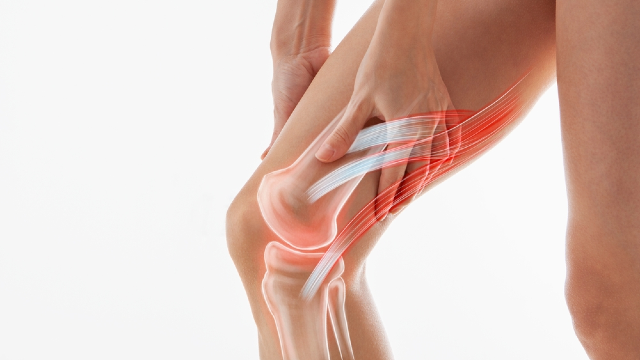
Chronic Tendon Pain Explained: When ESWT May Help
What chronic tendon pain is, why tendons are slow to settle, what conservative care comes first, and where extracorporeal shock wave therapy fits in the plan.
Learn More

Is Manual Therapy Painful? What a Session Feels Like
Is manual therapy painful? What hands-on treatment usually feels like, how the intensity is set, and what to tell your clinician before and during a session.
Learn More

When Musculoskeletal Pain Needs a Specialist Assessment
The patient-side thresholds that move a musculoskeletal problem from self-care to a rehabilitation medicine assessment, and how to judge if yours apply.
Learn More