Specialized Rehabilitation & Pain Care in Gangnam, Seoul · Dedicated International Concierge

Medical Guide
Musculoskeletal Pain Management Korea: Non-Surgical Care
Musculoskeletal pain management in Korea: why diagnosis comes first, which non-surgical options a Seoul clinic lists, and what a first visit will cover.
Schedule a ConsultationMusculoskeletal Pain Management Explained: Non-Surgical Options at Well Rehabilitation Clinic
Medically reviewed by Dr. Kim DaeHwan, Director, Well Rehabilitation Clinic; Specialist in Rehabilitation Medicine
Musculoskeletal pain management in Korea, as it is practiced at Well Rehabilitation Clinic, begins with an examination rather than with a treatment. Musculoskeletal pain is discomfort arising from muscles, joints, tendons, ligaments and the tissues around them. The clinic, in Gangnam-gu, Seoul, states that accurate examination and diagnosis come first, and that the plan is then built around each patient's physical condition. This article walks through that sequence and what each of the clinic's listed non-surgical treatments is suited to.
What musculoskeletal pain is, and how common it is
Musculoskeletal pain originates in the body's movement system rather than in an internal organ. The World Health Organization describes musculoskeletal health as the performance of the locomotor system, meaning intact muscles, bones, joints and the connective tissue next to them. That organization reports that more than 150 separate diseases and conditions affect this system, and that roughly 1.71 billion people worldwide live with a musculoskeletal condition. It also states that these conditions are the leading contributor to disability worldwide, that low back pain is the single leading cause of disability in 160 countries, and that pain felt in musculoskeletal structures is the most common form of non-cancer pain.
MedlinePlus, the patient education service of the U.S. National Library of Medicine, notes that back pain is common and that almost everyone has it at some point in life. It adds a point worth holding onto: with chronic low back pain, the exact cause often cannot be pinned down.
Why accurate diagnosis comes before treatment selection
Treatment selection depends on the diagnosis, because the same painful spot can have several different causes. A sore shoulder may involve a tendon, a joint, a nerve, an overloaded muscle, or a combination of these. Each points toward a different first-line approach, so choosing a treatment before finishing the examination risks treating the wrong tissue.
Well Rehabilitation Clinic emphasizes individualized treatment selection based on the patient's physical condition rather than treating pain by body location alone. Dr. Kim DaeHwan's stated clinical philosophy places the same weight on early management of musculoskeletal pain, on accurate examination and diagnosis before treatment, and on specialist-delivered care.
What an evaluation usually covers
A rehabilitation consultation for musculoskeletal pain generally reviews:
- your current symptoms, including where the pain sits and how long it has been there
- your medical history and your current medications
- functional limitations, meaning what the pain stops you doing
- previous treatment and how your body responded to it
- relevant imaging or surgical records, when you have them
- activities that reliably make the pain worse or better
What a Rehabilitation Medicine specialist contributes
A Rehabilitation Medicine specialist is trained to treat movement-system problems without surgery, with function as the goal. The American Academy of Physical Medicine and Rehabilitation explains that this field, also called physiatry or rehabilitation medicine, aims to restore functional ability and quality of life for people with physical impairments affecting the brain, spinal cord and nerves, or the bones, joints, ligaments, muscles and tendons. A physician trained in it is called a physiatrist.
Rehabilitation Medicine is Dr. Kim DaeHwan's specialty, and he directs Well Rehabilitation Clinic. His degree in medicine came from Hallym University College of Medicine. Residency training in the specialty followed at Bundang Jesaeng Hospital. His university appointments include a former outpatient professor role at Kyung Hee University College of Medicine and a current one at Catholic Kwandong University College of Medicine. On the society side he holds full membership of the Korean Academy of Rehabilitation Medicine. The Korean Association of Clinical Pain also lists him as a full member. A third affiliation is the Korean Society of Electromyography and Electrodiagnostic Medicine, the field concerned with testing how nerves and muscles are functioning.
The conservative options among the clinic's listed services
The clinic's listed services include several non-surgical routes for musculoskeletal pain, and they are not interchangeable. Each answers a different clinical question, which is why the examination comes first.
Manual therapy for spine and joints
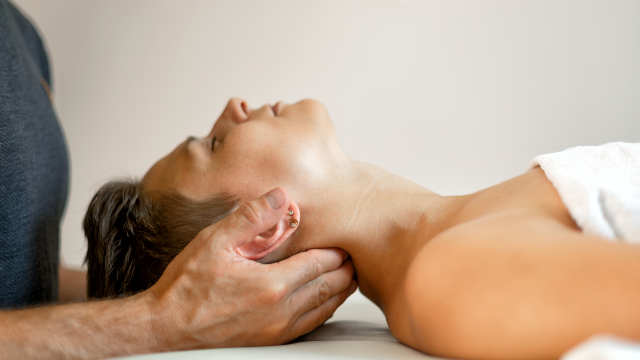
Manual therapy is hands-on treatment delivered by a clinician as part of a wider rehabilitation plan. At Well Rehabilitation Clinic it appears with 30-minute and 50-minute session options, and it is performed without anesthesia because it is non-invasive. It tends to suit stiffness, reduced range of motion and movement-related restriction in the spine or joints. On safety, the National Center for Complementary and Integrative Health reports that mild-to-moderate side effects such as temporary soreness, stiffness or headache are common after spinal manipulation or mobilization, and that most resolve within 24 hours.
Focused and radial shock wave therapy
Extracorporeal shock wave therapy, usually shortened to ESWT, delivers sound-wave energy through the skin to a targeted area without an incision. Well Rehabilitation Clinic provides both focused and radial ESWT using STORZ systems, with listed configurations of 2,000 or 3,200 shocks for focused treatment and 4,000 shocks for radial treatment. A review in the Journal of Orthopaedic Surgery and Research explains that shock waves used in orthopedics are applied to induce tissue repair and regeneration rather than to break tissue apart, and that the main uses are sports-related overuse tendon problems such as plantar fasciitis of the heel, tennis elbow, and shoulder and patellar tendon conditions.
PRP therapy
Platelet-rich plasma therapy, or PRP, prepares a concentrated platelet solution from a sample of your own blood and applies it to the treated area. At this clinic, PRP is listed for the shoulder, elbow, wrist, ankle, foot and knee joint. A review in SICOT-J found that the published evidence suggests possible benefit in knee osteoarthritis and in lateral epicondylitis, commonly called tennis elbow, while results for rotator cuff repair and for patellar and Achilles tendon problems were inconsistent.
Postural and alignment-focused rehabilitation
Postural rehabilitation targets posture, movement patterns, muscle balance and flexibility rather than a single sore structure. It may combine therapeutic exercise, movement retraining, stretching and manual techniques, and it generally starts with assessment of body alignment and movement. It suits people whose discomfort or functional limitation is tied to posture and movement habits.
How a clinician chooses between them
The decision is clinical rather than a menu choice. In practice it turns on:
- the working diagnosis and which tissue appears to be generating the pain
- how long symptoms have been present
- what previous treatment has been tried, and what it achieved
- your functional goals, such as returning to work, sport or a specific activity
- whether an injection-based option is medically appropriate for you
- whether findings suggest that further diagnostic evaluation should come first
Why an individualized plan beats a standard protocol
A standard protocol assumes that everyone with pain in one region has the same problem, and they do not. Well Rehabilitation Clinic's position is that technique and treatment intensity should follow symptoms, movement findings, functional limitations and recovery goals rather than a fixed routine.
One clinic-specific detail shows what that looks like in practice. The clinic's director explains that he personally performs ESWT rather than routinely delegating it. Because the physician who examined you is the one holding the applicator, the treated area can be reassessed during the session and modified when the tissue generating pain turns out to differ from the initial assessment. The clinic has focused on musculoskeletal pain treatment and postoperative rehabilitation since it opened in 2019.
What the published evidence supports for conservative management
Conservative, non-surgical care is the mainstream starting point for common musculoskeletal pain, and that position comes from guideline bodies rather than from marketing. The American College of Physicians, in a clinical practice guideline published in Annals of Internal Medicine, recommends that clinicians and patients use non-drug treatment as first-line therapy for chronic low back pain, and also recommends non-drug approaches for acute low back pain.
The Agency for Healthcare Research and Quality, through its Effective Health Care Program, has reviewed noninvasive nonpharmacological treatments for five common chronic pain conditions: chronic low back pain, chronic neck pain, osteoarthritis, fibromyalgia and tension headache. That review found that exercise, multidisciplinary rehabilitation, massage, acupuncture and mind-body practices most consistently improved function or pain beyond the end of therapy, that manual therapies were among the approaches helping hip osteoarthritis, and that effect sizes were generally small. The National Center for Complementary and Integrative Health describes a similar picture for spinal manipulation in low back pain: small improvements in function and pain, on evidence graded low to moderate in strength. Trial results are averages, and they cannot predict any single person's response.
When pain warrants prompt medical evaluation
Some symptoms call for medical assessment rather than self-management. MedlinePlus advises contacting your health care provider for severe back pain that does not go away, and contacting them right away if you develop numbness, loss of movement, weakness, or changes in bowel or bladder function.
Well Rehabilitation Clinic takes the same position. Musculoskeletal pain management may not suit patients who need additional evaluation or a different care pathway, particularly when pain follows significant trauma or comes with symptoms suggesting a more serious underlying condition. Treatment should be postponed or modified when a clinician judges that the underlying problem needs another diagnostic or medical approach first.
How progress is measured
Progress is tracked through change over time rather than through a single number. The measures used in rehabilitation practice are pain intensity, mobility, range of motion, physical function and the ability to carry out daily activities. Research in this field assesses function with structured questionnaires, as the National Center for Complementary and Integrative Health notes, covering ordinary tasks such as walking, standing and sleeping.
Expect change to be gradual rather than immediate, and expect follow-up evaluation to check symptom change, functional improvement and whether more treatment is appropriate. Conservative rehabilitation is generally low risk, though temporary soreness or a short symptom flare-up can occur; injection-based treatments carry additional procedure-specific risks such as bleeding, infection or nerve irritation.
What to expect from a first visit
A first visit is an assessment appointment rather than a treatment session booked in advance. Bring an accurate medical history, a list of your current medications, details of previous treatment and any relevant imaging or surgical records. Be ready to describe which activities worsen the pain and which ease it. The clinician then selects a plan, which may include manual therapy, ESWT, PRP or postoperative rehabilitation, and reassesses to adjust it as your condition changes.
Well Rehabilitation Clinic sits on the 5th floor of KB Woojun Tower at 447 Teheran-ro in Gangnam-gu, Seoul. Weekday hours run from 9:00 AM to 7:00 PM Korea Standard Time, with a lunch break from 1:30 PM to 2:30 PM, and the clinic is closed on weekends and public holidays. Registration with Korea's Ministry of Health and Welfare covers it as a medical institution for attracting foreign patients, under the national law on medical overseas expansion and foreign patient attraction. You can read more on the About Us page.
If you are planning a trip from the United States, general planning guidance applies: allow time for flights to Seoul, accommodation and local transport in Gangnam, the consultation, any recommended sessions, and a reassessment before you fly home. Length of stay is best settled individually after clinical evaluation. Use the clinic's contact page to ask how appointments can be arranged for your own case.
The Bottom Line
- The World Health Organization reports that roughly 1.71 billion people worldwide live with a musculoskeletal condition.
- Well Rehabilitation Clinic states that accurate examination and diagnosis precede treatment, and that the plan follows each patient's physical condition rather than the painful location alone.
- The clinic's listed non-surgical services include manual therapy for spine and joints, focused and radial ESWT, PRP therapy, postural and body alignment correction, and postoperative rehabilitation.
- Guideline bodies including the American College of Physicians place non-drug treatment first for common low back pain, with reported effects that are usually modest.
- Severe pain that does not settle, or new numbness, weakness or bowel or bladder changes, calls for prompt medical assessment.
Frequently Asked Questions
Is musculoskeletal pain management at this clinic a non-surgical approach?
Yes. Well Rehabilitation Clinic's musculoskeletal pain management is a personalized approach to assessing and treating pain involving muscles, joints, tendons, ligaments and related structures. Its listed options include physical rehabilitation, exercise and manual therapy. Suitability is decided through consultation.
Who performs shock wave therapy at Well Rehabilitation Clinic?
The clinic's director, Dr. Kim DaeHwan, explains that he personally performs ESWT rather than routinely delegating it. He describes a practical benefit: the treated area can be reassessed and modified during the session when the tissue producing the pain differs from the initial clinical assessment. The clinic uses STORZ equipment in both focused and radial configurations.
Which joints does the clinic list for PRP therapy?
Well Rehabilitation Clinic lists PRP therapy for the shoulder, elbow, wrist, ankle, foot and knee joint. PRP uses a concentrated preparation of your own platelets, applied to the targeted area. Whether it fits your situation depends on the diagnosis, your symptoms and your overall health, which is why a medical evaluation comes first.
How long is a shock wave therapy session, and how many will I need?
An ESWT session commonly takes around 10 to 30 minutes, though treatment time varies with the condition and the protocol used. A course of several sessions is more usual than a single visit. The clinic's listed configurations include 2,000 and 3,200 shocks for focused ESWT and 4,000 shocks for radial ESWT.
Does manual therapy require anesthesia?
Manual therapy at this clinic is generally performed without anesthesia, because it is a non-invasive hands-on rehabilitation treatment. Sensations of pressure or stretching, and short-lived discomfort, can accompany particular techniques; how firmly each one is applied is matched to your tolerance and to clinical need. Session options are listed at 30 and 50 minutes.
When should I have pain assessed instead of managing it myself?
MedlinePlus, from the U.S. National Library of Medicine, advises contacting a health care provider for severe back pain that does not go away, and seeking help right away for numbness, loss of movement, weakness, or bowel or bladder changes. Pain that follows significant trauma also warrants medical evaluation first. Dr. Kim's stated clinical emphasis is on managing musculoskeletal pain early.
This article is for general informational purposes and does not constitute individualized medical advice. It is not a self-diagnosis tool. Treatment candidacy, technique, and expected outcomes can only be determined through a consultation with a qualified physician. Care at Well Rehabilitation Clinic is delivered in the Republic of Korea under Korean medical regulation. Individual results vary and no specific outcome is guaranteed.
More Articles
Continue reading educational guides from Well Rehabilitation Clinic.
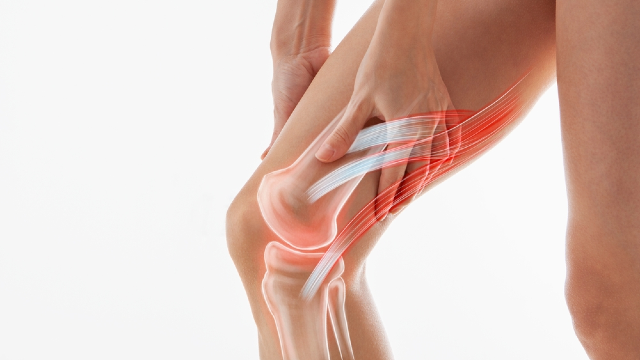
Chronic Tendon Pain Explained: When ESWT May Help
What chronic tendon pain is, why tendons are slow to settle, what conservative care comes first, and where extracorporeal shock wave therapy fits in the plan.
Learn More
Is Manual Therapy Painful? What a Session Feels Like
Is manual therapy painful? What hands-on treatment usually feels like, how the intensity is set, and what to tell your clinician before and during a session.
Learn More
When Musculoskeletal Pain Needs a Specialist Assessment
The patient-side thresholds that move a musculoskeletal problem from self-care to a rehabilitation medicine assessment, and how to judge if yours apply.
Learn More