Specialized Rehabilitation & Pain Care in Gangnam, Seoul · Dedicated International Concierge


Medical Guide
Chronic Tendon Pain Explained: When ESWT May Help
What chronic tendon pain is, why tendons are slow to settle, what conservative care comes first, and where extracorporeal shock wave therapy fits in the plan.
Schedule a ConsultationChronic Tendon Pain Explained: When ESWT May Help
Medically reviewed by Dr. Kim DaeHwan, Director, Well Rehabilitation Clinic; Specialist in Rehabilitation Medicine
Chronic tendon pain is pain arising from a tendon that has been overloaded repeatedly rather than damaged in a single dramatic event, and extracorporeal shock wave therapy is one of the options a clinician may consider once an accurate diagnosis has been made and first-line conservative care has been given a fair trial. That sequence — diagnosis first, conservative care next, ESWT considered after — is the honest version of the answer, and it is the version this article is organized around. The reference literature places shock wave therapy as an adjunct for certain tendons rather than as a standalone fix, and that is how a rehabilitation physician treats it.
What a tendon is doing when it hurts
A tendon is the dense cord of collagen that transmits force from a muscle to a bone. Its job is mechanical: every time the muscle contracts, the tendon carries the load across a joint. Tendons are strong in tension and comparatively poorly supplied with blood, which is the single structural fact that explains most of what follows.
Tendon problems cluster where tendons work hardest and most repetitively. MedlinePlus, the patient education service of the US National Library of Medicine, describes rotator cuff problems in the shoulder as mostly wear-and-tear injuries from performing the same arm movements over and over, especially reaching overhead, and it names the occupational and athletic groups in which that pattern concentrates — tennis players, swimmers, baseball pitchers, carpenters, painters and construction workers among them. The same logic applies at the elbow, the hip, the knee and the heel.
The vocabulary you will hear, sorted out
Three terms circulate, and they are not interchangeable.
Tendinitis describes an inflammatory picture in the tendon. MedlinePlus's description of shoulder tendinitis is a useful concrete case: tendons becoming irritated and swollen from being pinched during shoulder movement.
Tendinosis, according to StatPearls, the peer-reviewed clinical reference hosted on the NIH's National Center for Biotechnology Information Bookshelf, refers to a degenerative process within a tendon, characteristically with little to no inflammation. Traditionally, tendinitis was applied to acute and subacute presentations and tendinosis to chronic ones.
Tendinopathy is the umbrella term covering that whole family, including tendon ruptures and tenosynovitis — inflammation of the tissue surrounding the tendon.
The distinction is not pedantry. If a long-standing problem is a degenerative one rather than an inflammatory one, then anti-inflammatory strategies are working on a mechanism that may not be the dominant one, which is part of why long-standing tendon pain so often frustrates the treatments that worked on the acute version.
Why these problems take as long as they do
Tendons heal slowly, and the limited blood supply is the reason usually given. StatPearls notes that most patients with overuse tendinopathies recover within three to six months — a timeframe that is reassuring and demoralizing in roughly equal measure, and one worth knowing before you conclude that four weeks of no change means nothing will ever work.
The reference literature also describes a set of systemic and mechanical factors that influence how much stress a tendon is under and how well it tolerates it. StatPearls names body mass index, nutrition, body mechanics, muscle imbalances and flexibility as influencing tendon loading and stress, and separately notes that smoking reduces oxygen delivery to tissue, that diabetes alters collagen structure, and that dyslipidemia is associated with disorganization of collagen fibrils. Genetics plays a part as well.
There is a medication dimension too, and it is one to raise at your appointment rather than to act on alone. StatPearls records that fluoroquinolone antibiotics carry an established association with tendinopathy and tendon rupture, with the risk substantially higher when certain other medications are taken alongside them, and with age over 60, renal failure, diabetes and a previous tendon injury among the additional risk factors. It also notes that the role of NSAIDs in overuse tendon injury is debated, with some study results suggesting potential harm. None of that is a reason to stop a prescribed medication; all of it is a reason to bring your medication list to the consultation.
What comes before any device is discussed
First-line management of tendon overuse problems is conservative and is not glamorous. StatPearls describes it as rest, cryotherapy, and eccentric exercise guided by a physical or occupational therapist, with correction of biomechanics and tendon-specific muscle loading. The same source notes that steroid injections are no longer regarded as first-line in this setting because of their association with worse long-term outcomes.
Two things follow for a patient. First, loading is treatment, not the opposite of treatment: the aim is generally to change how the tendon is loaded rather than to stop using it entirely. Second, the unglamorous part is the part with the strongest support, and a clinician who starts there is following the evidence rather than withholding something better.
MedlinePlus's account of rotator cuff care follows the same shape — rest, cold, pain relievers, and physical therapy to strengthen the shoulder and improve movement, with an injection considered if other treatments have not helped the pain, and surgery raised as an option when the shoulder has not improved over six to twelve months.
Where shock wave therapy actually sits
Extracorporeal shock wave therapy delivers acoustic energy to a targeted area through the skin, without an incision. Well Rehabilitation Clinic's documented description is that ESWT is a non-invasive treatment delivering focused or radial sound-wave energy to targeted tissues, commonly used for certain chronic musculoskeletal and tendon-related conditions. The clinic's approved statement about the service is that it provides focused and radial ESWT as part of its musculoskeletal pain management services.
The clinical reference literature is careful in how it phrases the role, and it is worth quoting that care rather than softening it. StatPearls, in its account of management options for tendon degeneration, describes extracorporeal shockwave therapy as something that may serve as an adjunct for certain tendons. Adjunct is the operative word. It sits alongside a loading program and a diagnosis, not instead of them, and its applicability is tendon-specific rather than general.
What ESWT is not
Stating this plainly saves disappointment later.
It is not a repair procedure, and nothing in the clinic's documentation or the public reference sources supports describing it as one. It is not a cure. It does not remove the need for surgical assessment where a structural problem calls for it, and it is not a reason to skip the evaluation that establishes what is actually wrong. The clinic's own documented outcome language is hedged for good reason. It puts the possible benefits as pain relief, better mobility and physical function, and improved quality of life — each stated as something treatment may do, and each qualified by how much the diagnosis and the severity of the problem vary from person to person.
A comparison of ESWT with platelet-rich plasma, and a separate comparison with injected corticosteroid, are each handled in their own articles on this site; this one stays on the question of when a tendon problem is the kind of problem for which ESWT is raised at all.
What the evaluation has to establish first
The clinic's documented approach is that accurate examination and diagnosis come before treatment selection, and that pain location, the patient's physical condition, and the response to treatment are all weighed when planning care. For a long-standing tendon complaint, that assessment is doing several jobs at once:
- Confirming that the pain is coming from the tendon rather than from a joint, a nerve, a referred source, or something requiring a different pathway entirely.
- Establishing how long it has been present and what has already been tried, including whether a loading program was actually followed.
- Identifying the load that keeps reproducing it — which is often an occupational or training pattern rather than a single incident.
- Reviewing medication and medical history for the factors described above.
- Deciding whether imaging adds anything. StatPearls notes that ultrasound can show increased spacing of the fibrillar lines within a tendon, reduced echogenicity, thickening, and new vessel formation on color Doppler, while MRI is useful but offers lower spatial resolution.
Who needs a different pathway first
The clinic's documented position is that ESWT does not suit everyone — some conditions call for a different form of medical management, and some need more evaluation before anything is chosen — and more generally that care should be held or reshaped when a clinician judges that the underlying problem calls for another route first.
Some specific triggers for prompt assessment are worth carrying independently. MedlinePlus advises that if your arm feels weak immediately after a sudden shoulder injury you should see a provider as soon as possible, and notes that treatment at that stage can keep milder rotator cuff problems from becoming more serious. On the lower back specifically, the same service advises contacting a provider when symptoms are severe or have not improved after three days, and seeking attention when they followed an injury. Symptoms of that kind belong in front of a clinician before any elective treatment is scheduled.
Living with the problem while it is being treated
Two practical points from the reference literature deserve more attention than they usually get.
StatPearls's patient-education guidance for tendon overuse problems recommends temporarily avoiding the movement that triggers symptoms, warming up before exercise, limiting repetitive workplace movements, avoiding prolonged inactivity, and working on muscle strength and general fitness — and it notes that relapse is common when the underlying cause is not addressed. The last point is the one that decides long-term outcomes. If the tendon returns to exactly the load pattern that irritated it, the problem tends to return with it.
The second point concerns everything around the tendon. MedlinePlus notes that long-running pain reaches into mood and relationships as well as into movement, and that stress and low mood can worsen it. The NIH's National Center for Complementary and Integrative Health, for its part, opens its pain material by observing that no symptom sends more people to a doctor. Sleep, workload and stress are legitimate parts of a tendon pain conversation, not a change of subject.
Arranging an assessment
Well Rehabilitation Clinic is a rehabilitation medicine clinic in Gangnam-gu, Seoul, which has documented musculoskeletal pain treatment as a core area of care since it opened in 2019. Its director, Dr. Kim DaeHwan, is a Rehabilitation Medicine specialist whose documented clinical focus areas include musculoskeletal pain management and extracorporeal shock wave therapy. Focused and radial ESWT are both documented among the clinic's equipment and services.
Whether ESWT belongs in your plan is a clinical judgment made after examination, not a conclusion you or an article can reach in advance. A written inquiry can be started from the clinic's contact page. Its About Us page carries the clinic and director background. Appointments are weekday only; the clinic does not open at weekends or on public holidays.
The Bottom Line
- Chronic tendon pain usually reflects repeated overload rather than a single injury, and tendons are slow to settle partly because their blood supply is limited.
- Tendinitis, tendinosis and tendinopathy describe different pictures; StatPearls defines tendinosis as a degenerative process with little to no inflammation.
- First-line care is conservative — relative rest, cryotherapy, and therapist-guided eccentric loading with correction of biomechanics.
- StatPearls describes extracorporeal shockwave therapy as something that may serve as an adjunct for certain tendons, which is exactly how a rehabilitation physician should present it.
- Well Rehabilitation Clinic provides focused and radial ESWT within its musculoskeletal pain management services; candidacy is decided after clinical evaluation.
Frequently Asked Questions
What is the difference between tendinitis and tendinosis?
Tendinitis describes an inflammatory picture in a tendon, while StatPearls defines tendinosis as a degenerative process within the tendon with little to no inflammation. Traditionally tendinitis was applied to acute and subacute presentations and tendinosis to chronic ones. Tendinopathy is the umbrella term for the whole group.
How long does a chronic tendon problem usually take to settle?
StatPearls reports that most patients with overuse tendinopathies recover within three to six months. That is a general figure from the literature rather than a prediction about any individual, and your own timeline depends on the tendon involved, the load you place on it, and what else is going on medically.
Is ESWT a treatment that fixes the tendon?
No, and it should not be presented that way. The reference literature describes shock wave therapy as an adjunct for certain tendons within a broader management plan. The clinic's documented language puts the possible benefits as pain relief and improvement in mobility and physical function, qualified by diagnosis and severity.
Do I need an injection or anesthesia for shock wave therapy?
ESWT is non-surgical and generally does not require anesthesia. The clinic's documented approach is that treatment intensity can be adjusted according to what the patient tolerates and what clinical judgment calls for.
Should I stop my medication if it is on the risk list?
No — raise it with a clinician rather than stopping anything yourself. StatPearls records associations between fluoroquinolone antibiotics and tendon problems, and notes that the debate over NSAIDs in overuse injury is unresolved. Bringing your current medication list to the consultation is the useful step.
Does rest alone fix a tendon problem?
Generally not on its own. The conservative program described in the literature combines relative rest with therapist-guided eccentric loading and correction of biomechanics, and StatPearls specifically warns against prolonged inactivity. Changing how the tendon is loaded is usually more productive than stopping altogether.
Why does the problem come back after it settles?
StatPearls notes that relapse is common when the underlying cause is not addressed. If the movement pattern, workload or training error that overloaded the tendon returns unchanged, the symptoms often return with it, which is why the load conversation is part of the treatment rather than an afterthought.
How do I find out whether ESWT is appropriate for me?
Through an examination. The clinic's documented position is that accurate examination and diagnosis precede treatment selection, and that some conditions call for a different form of medical management, or for further evaluation, before a treatment is chosen. Patient-facing material from the clinic is collected on its before and after page.
This article is for general informational purposes and does not constitute individualized medical advice. It is not a self-diagnosis tool. Rehabilitation candidacy, technique, and expected outcomes can only be determined through a consultation with a qualified rehabilitation physician.
More Articles
Continue reading educational guides from Well Rehabilitation Clinic.
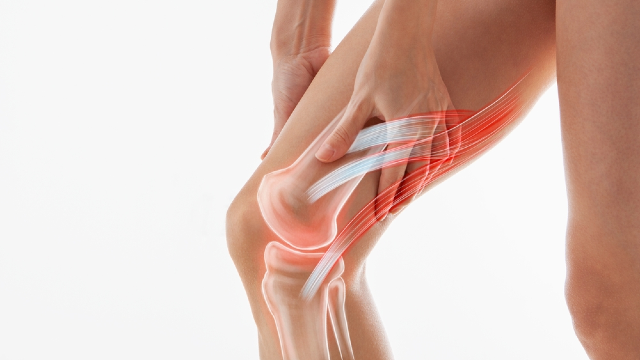
Chronic Tendon Pain Explained: When ESWT May Help
What chronic tendon pain is, why tendons are slow to settle, what conservative care comes first, and where extracorporeal shock wave therapy fits in the plan.
Learn More

Is Manual Therapy Painful? What a Session Feels Like
Is manual therapy painful? What hands-on treatment usually feels like, how the intensity is set, and what to tell your clinician before and during a session.
Learn More

When Musculoskeletal Pain Needs a Specialist Assessment
The patient-side thresholds that move a musculoskeletal problem from self-care to a rehabilitation medicine assessment, and how to judge if yours apply.
Learn More