Specialized Rehabilitation & Pain Care in Gangnam, Seoul · Dedicated International Concierge

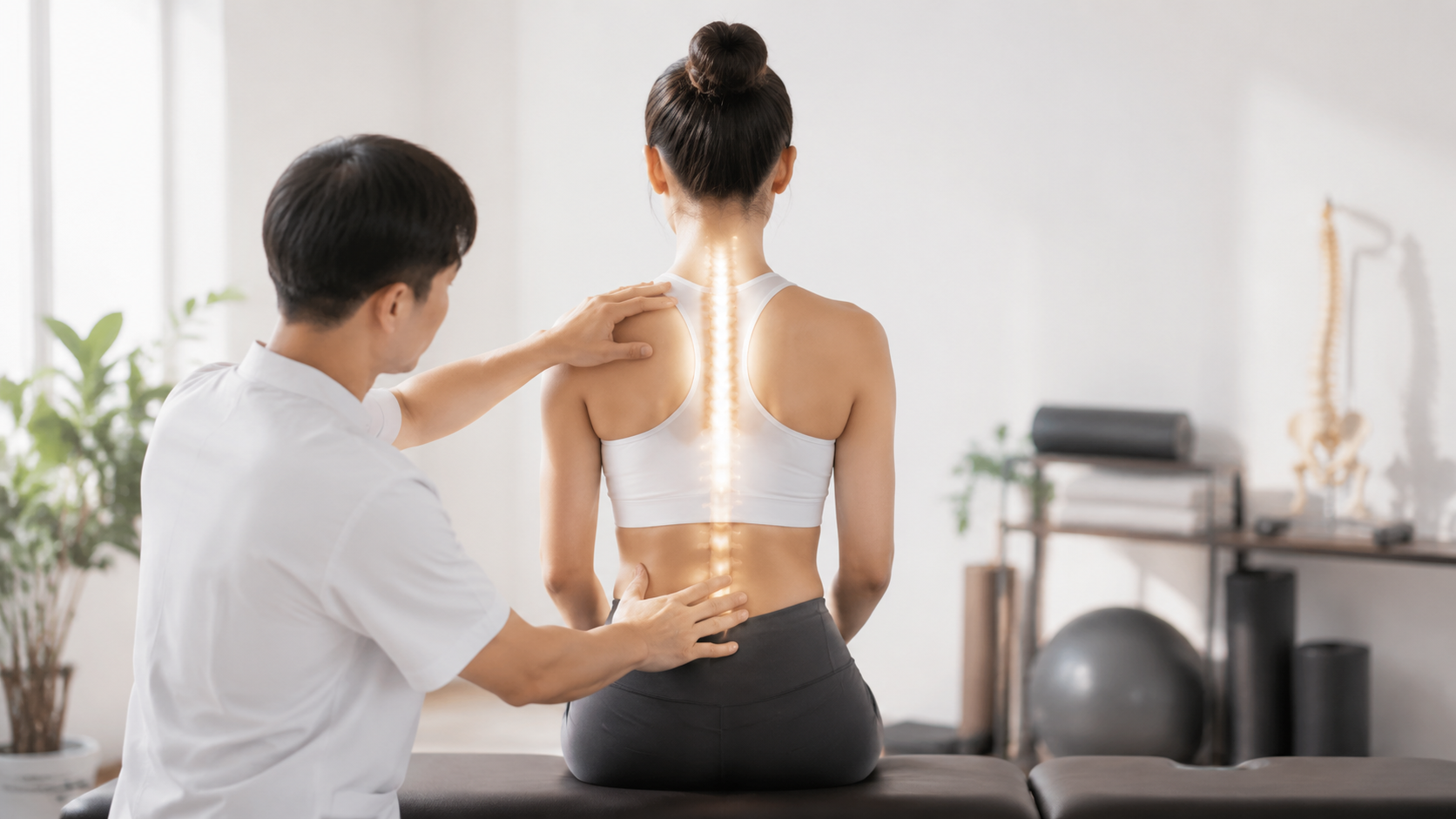
Postural Rehabilitation · Needs Clinic Confirmation
Postural & Body Alignment Correction
Postural & Body Alignment Correction is a non-surgical approach designed to improve posture, body alignment, and movement patterns using manual techniques, stretching, strengthening, and corrective exercises directed at the specific cause of an imbalance…
Schedule a ConsultationPostural & Body Alignment Correction in Seoul: Targeted Alignment Care at Well Rehabilitation Clinic
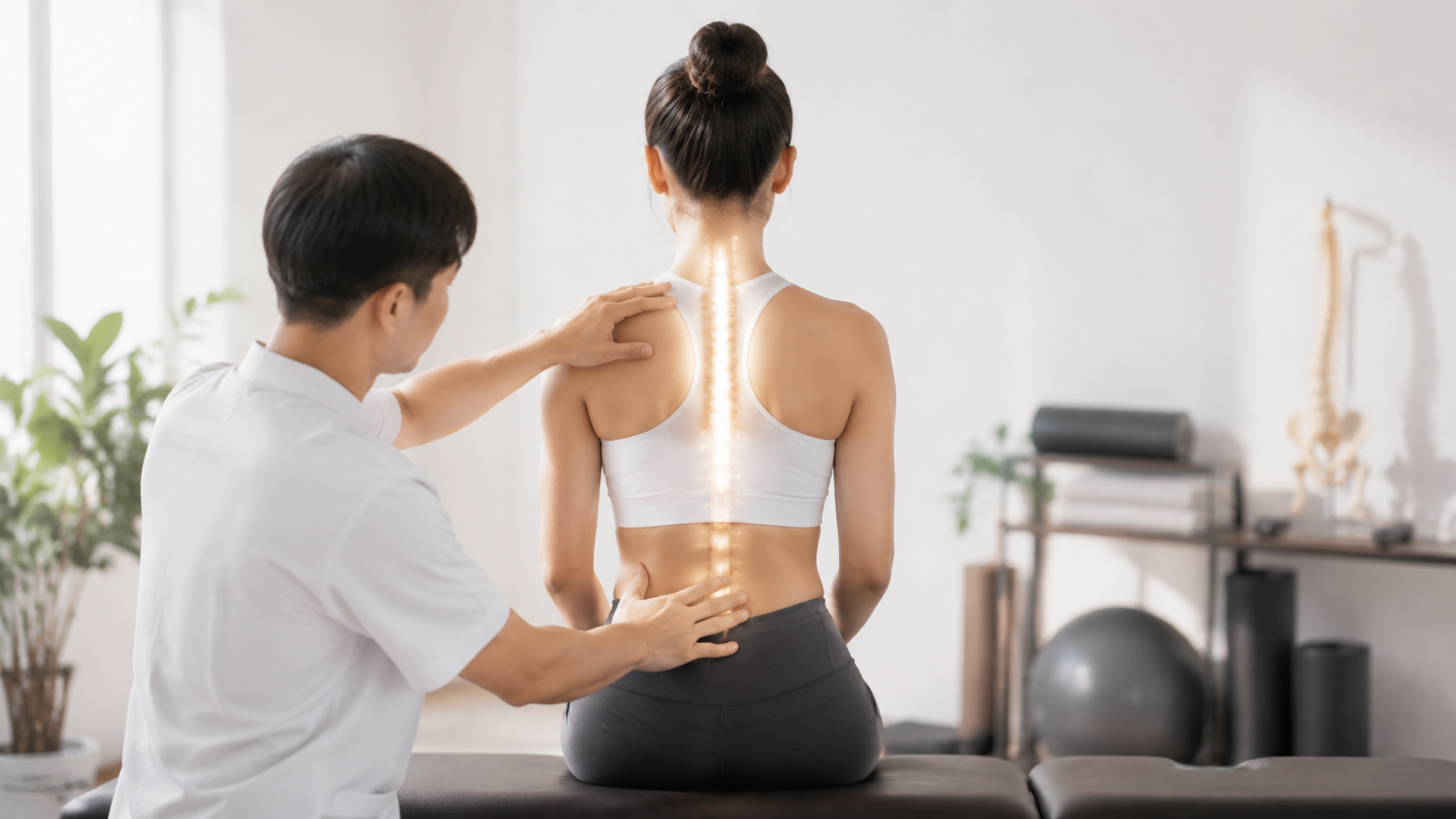
Medically reviewed by Dr. Kim DaeHwan, Director, Rehabilitation Medicine Specialist, Hallym University College of Medicine
Postural & Body Alignment Correction is a non-surgical program that uses manual techniques, stretching, strengthening, and corrective exercises to address the specific cause of a posture or body-alignment imbalance. At Well Rehabilitation Clinic in Gangnam, Seoul, the program is built around a precision evaluation of each patient's individual movement mechanics and alignment patterns rather than a one-size-fits-all routine. This page explains what the service involves, who it is designed for, and what patients can expect from the first evaluation through follow-up care.
What Is Postural & Body Alignment Correction?
Postural & Body Alignment Correction is a non-surgical approach designed to improve posture, body alignment, and movement patterns using manual techniques, stretching, strengthening, and corrective exercises directed at the specific cause of an imbalance rather than only the symptomatic area.
Non-surgical rehabilitation approach that typically does not require anesthesia; comfort during sessions depends on the specific techniques used and the patient's individual condition.
Begins with an assessment of posture and movement patterns before any technique is applied.
Combines manual techniques, stretching, strengthening, and corrective exercises within one individualized plan, rather than a generic exercise handout.
Analyzes each patient's individual movement mechanics and alignment patterns to target the root cause of the imbalance, not simply the area where discomfort is noticed.
A more targeted service than the clinic's broader Postural Rehabilitation program, for patients whose primary concern is a defined alignment imbalance rather than a wider range of posture and movement-pattern goals.
Independent health resources describe posture as the position in which the body is held while standing, sitting, or moving, maintained continuously by the coordinated action of muscles, ligaments, tendons, and joints; posture is generally categorized as either static (how the body is held while stationary) or dynamic (how the body stays aligned while moving), and a body-alignment program typically considers both. The U.S. National Library of Medicine's MedlinePlus service notes that poor posture can misalign the musculoskeletal system, wear away at the spine, cause neck, shoulder, and back pain, decrease flexibility, and affect balance and joint movement — findings that are broadly consistent with why an evaluation-based approach, rather than a standardized exercise sheet, is emphasized in this program (see Sources & Further Reading). Harvard Health Publishing similarly describes good posture as keeping the spine's natural cervical, thoracic, and lumbar curves in balance, with the ear, shoulder, hip, knee, and ankle aligned vertically when standing, and poor posture — including a forward head position and rounded shoulders — as a recognized contributor to back, neck, and shoulder strain (see Sources & Further Reading).
Who Performs Postural & Body Alignment Correction at Well Rehabilitation Clinic

Dr. Kim DaeHwan
Rehabilitation Medicine Specialist
Postural & Body Alignment Correction at Well Rehabilitation Clinic is led by Dr. Kim DaeHwan, the clinic's Director and a specialist in Rehabilitation Medicine. Dr. Kim graduated from Hallym University College of Medicine, completed clinical training at Hallym University Kangdong Sacred Heart Hospital, and completed residency training in Rehabilitation Medicine at Bundang Jesaeng Hospital, with a documented clinical focus that includes spine and joint rehabilitation, manual therapy, and musculoskeletal pain management. He is a Titleist Performance Institute (TPI) Certified Professional, a credential centered specifically on analyzing movement mechanics and body-alignment patterns. The clinic states that its postural correction programs deliver precision evaluation and custom treatment plans tailored to each patient's unique physical profile, analyzing individual movement mechanics and alignment patterns to target the root cause of imbalance rather than applying a one-size-fits-all approach. Dr. Kim is also a Full Member of the Korean Academy of Rehabilitation Medicine, the Korean Association of Clinical Pain, and the Korean Society of Electromyography and Electrodiagnostic Medicine, and holds current and former university teaching roles, respectively, at Catholic Kwandong University College of Medicine and Kyung Hee University College of Medicine.
Who Is a Good Candidate for Postural & Body Alignment Correction?
Patients experiencing posture-related discomfort.
Patients with movement imbalance or muscle tension connected to posture or alignment.
Patients with functional limitations that affect daily activities because of body-alignment issues.
Patients who want a clearer understanding of their own movement patterns to support healthier functional habits going forward.
Patients who have already been evaluated and are not found to need a different care pathway for an underlying medical condition outside the scope of rehabilitation.
Postural & Body Alignment Correction may not be suitable for every patient. Those with symptoms that require evaluation or treatment outside rehabilitation care may need additional assessment — and potentially a different care pathway — before beginning this program; this is determined individually during consultation, not assumed in advance.
What to Expect: Procedure, Recovery, and Results Timeline
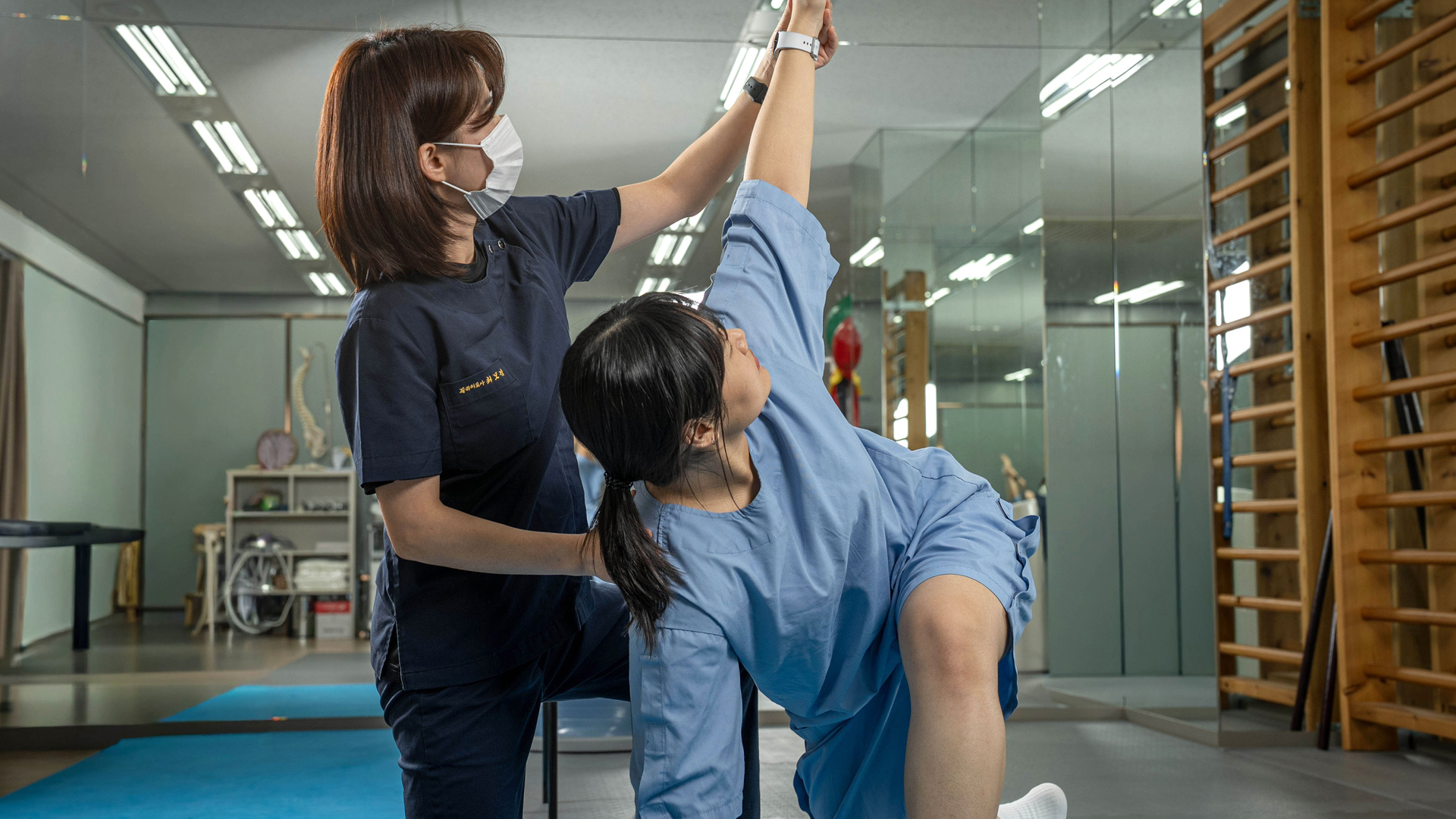
Care begins with a consultation that evaluates posture, body alignment, movement patterns, current symptoms, and functional limitations. Patients are asked to share information about their symptoms, any previous treatments, relevant medical history, daily activities, and specific movement-related concerns, so the assessment reflects each patient's actual situation rather than a generic checklist. The process itself generally begins with this assessment of posture and movement patterns, which is then used to design an individualized plan combining manual techniques, stretching, strengthening, and corrective exercises. As a non-surgical rehabilitation approach, the program typically does not require anesthesia, and treatment comfort depends on the specific techniques used and the patient's individual condition.
Stage | What Happens |
|---|---|
Initial consultation | Evaluation of posture, body alignment, movement patterns, symptoms, and functional limitations |
Assessment-based planning | Individualized combination of manual techniques, stretching, strengthening, and corrective exercises, based on each patient's movement mechanics and alignment patterns |
Active treatment sessions | Duration and visit frequency tailored to the patient's condition and rehabilitation goals; a personalized schedule is established following the initial evaluation |
Aftercare | Continuing recommended exercises, maintaining healthier movement habits, and attending follow-up evaluations when advised |
Progress review | Reassessment of posture, movement quality, comfort, flexibility, and daily functional ability |
Recovery and improvement depend on the patient's condition, posture-related concerns, and consistency with recommended rehabilitation activities; continued practice of appropriate movement habits may be important for maintaining progress. Results and longer-term outcomes are measured by noticeable improvements in posture, movement quality, comfort, flexibility, and daily functional ability, rather than by a single fixed milestone.
Independent evidence on postural correction exercise programs offers useful general context for what a structured, multi-week program can achieve. A systematic review and meta-analysis of seven randomized controlled trials involving 627 participants found that corrective exercise programs significantly improved forward head posture, as measured by the craniovertebral angle, and reduced associated pain, although the reviewed studies varied in program length and the specific exercises used (see Sources & Further Reading). A separate systematic review of Global Postural Reeducation — a manual- and exercise-based postural technique conceptually related to the corrective-exercise and manual-therapy components used at Well Rehabilitation Clinic — found it to be more effective than no treatment for pain and disability among patients with musculoskeletal conditions, though not consistently superior to other active treatment approaches across every outcome measured (see Sources & Further Reading). These findings describe the published evidence base for postural correction techniques generally; they are not a claim about outcomes at Well Rehabilitation Clinic specifically, and each patient's own recovery timeline, results, and longevity depend on their individual condition, daily habits, and participation in the rehabilitation plan.
Combining Postural & Body Alignment Correction with Other Treatments
Postural & Body Alignment Correction may be combined with other rehabilitation approaches when clinically appropriate:
Therapeutic exercise and stretching, to support and extend the gains made during in-clinic corrective sessions.
Manual therapy, when the evaluation identifies a related joint or soft-tissue restriction contributing to the alignment problem.
Mobility training, to reinforce more efficient movement patterns for daily activities.
Ergonomic guidance, to help translate in-clinic corrections into sustainable daily habits at work or home.
The clinic's broader Postural Rehabilitation program, for patients whose goals extend beyond a single alignment imbalance to wider posture and movement-pattern concerns.
Whether and how to combine these approaches is determined by the treating clinician after evaluation, not selected by the patient in advance.
Safety, Precision, and Clinic Standards
Well Rehabilitation Clinic is a Registered Medical Institution for Attracting Foreign Patients, certified by South Korea's Ministry of Health and Welfare in compliance with the Medical Overseas Expansion and Foreign Patients Attraction Act, and is registered under Business Registration number 740-92-01117.
Treatment planning at the clinic begins with careful examination and diagnosis before any postural correction technique is applied, followed by an individualized plan based on the patient's physical condition.
Dr. Kim DaeHwan is a Rehabilitation Medicine Specialist in South Korea and a Full Member of the Korean Academy of Rehabilitation Medicine, the Korean Association of Clinical Pain, and the Korean Society of Electromyography and Electrodiagnostic Medicine.
Movement-mechanics assessment for this service specifically draws on Dr. Kim's Titleist Performance Institute (TPI) certification, a credential focused on analyzing movement patterns and body alignment.
Independent clinical guidance from the Academy of Orthopaedic Physical Therapy of the American Physical Therapy Association recommends exercise-based interventions, including targeted trunk and postural muscle activation, as part of evidence-based care for low back pain — a common driver of postural-correction referrals generally (see Sources & Further Reading).
Well Rehabilitation Clinic's published material does not specify a detailed complication rate or a list of contraindications specific to this service; risks, side effects, and individual suitability are reviewed directly with the patient before treatment begins.
Because Postural & Body Alignment Correction is delivered under Korean, not US, medical regulation, this page does not imply FDA approval or clearance of any specific technique, device, or product referenced in connection with the program.
The Bottom Line
Postural & Body Alignment Correction at Well Rehabilitation Clinic is a non-surgical program using manual techniques, stretching, strengthening, and corrective exercises to target the root cause of an alignment imbalance.
Care is led by Dr. Kim DaeHwan, a Rehabilitation Medicine Specialist who also holds Titleist Performance Institute (TPI) certification in movement and alignment assessment.
The program begins with an individualized evaluation of posture, alignment, and movement mechanics rather than a generic exercise routine.
Independent research on structured postural correction exercise and Global Postural Reeducation supports these general approaches as more effective than no treatment for posture-related pain and disability, at the level of the published evidence base.
Session duration, visit frequency, and expected results are determined individually after clinical evaluation, and no specific outcome is guaranteed.
Frequently Asked Questions
Am I a good candidate for Postural & Body Alignment Correction? Patients experiencing posture-related discomfort, movement imbalance, muscle tension, or functional limitations connected to body alignment may be suitable candidates after a clinical consultation confirms there is no underlying condition that needs a different care pathway first.
Is Postural & Body Alignment Correction safe for US and other international patients? Yes. The program is performed by licensed rehabilitation specialists at Well Rehabilitation Clinic, a Registered Medical Institution for Attracting Foreign Patients certified by Korea's Ministry of Health and Welfare, with English-speaking consultation and support available.
How long do I need to stay in Seoul for this program? Typically 7–14 days in Korea, depending on the individual treatment plan designed after your evaluation; exact length of stay should always be confirmed directly with the clinic before booking travel.
What is recovery like after Postural & Body Alignment Correction? Recovery is generally gradual, with little to no downtime for most patients, and depends on the individual's condition, posture-related concerns, and consistency in following the recommended rehabilitation activities between visits.
Who leads Postural & Body Alignment Correction at Well Rehabilitation Clinic? Dr. Kim DaeHwan, a Rehabilitation Medicine specialist and the clinic's Director, leads this program. He holds Titleist Performance Institute (TPI) certification specific to movement and alignment assessment, alongside formal rehabilitation-medicine training and residency.
Does Well Rehabilitation Clinic offer English-speaking support for this program? Yes, English-speaking consultation and support are available for international patients considering Postural & Body Alignment Correction at Well Rehabilitation Clinic.
What should I do if I have a concern after returning home? Well Rehabilitation Clinic advises contacting the clinic promptly by phone, email, or WhatsApp if a concern arises after returning home, so the clinical team can advise on next steps. This remote-contact option is separate from, and does not replace, seeking local in-person medical care for any urgent symptom.
Can Postural & Body Alignment Correction be combined with other services at the clinic? Yes, when clinically appropriate. Depending on the evaluation, it may be paired with therapeutic exercise, manual therapy, mobility training, ergonomic guidance, or the clinic's broader Postural Rehabilitation program, with the specific combination decided by the treating clinician rather than chosen by the patient in advance.
Book a Consultation at Well Rehabilitation Clinic
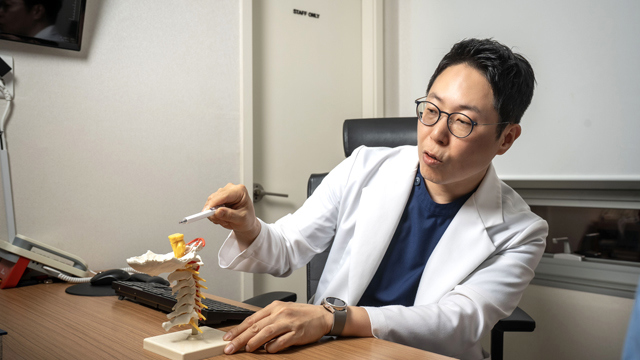
If posture-related discomfort, movement imbalance, or a specific body-alignment issue is affecting your daily activities, an individualized evaluation is the first step toward finding out whether Postural & Body Alignment Correction is right for you. Book a consultation with Dr. Kim DaeHwan at Well Rehabilitation Clinic in Gangnam, Seoul, or learn more about the clinic before your visit.
Disclaimer
This page is for general informational purposes only and does not constitute medical advice. It is not a substitute for a professional medical consultation, diagnosis, or treatment plan. Individual results, suitability, and treatment pathways vary and can only be determined through direct evaluation by a qualified clinician. No outcome is guaranteed. Always consult a licensed healthcare provider with any questions regarding a medical condition or treatment option.
Sources & Further Reading
Other Services
Explore additional rehabilitation and pain care options.

Skin Brightening IV Therapy
Skin Brightening IV Therapy is an intravenous wellness treatment intended to support skin-related wellness goals through IV administration of a glutathione- and thioctic-acid-based solution.
Learn More
PRP (Platelet-Rich Plasma) Therapy
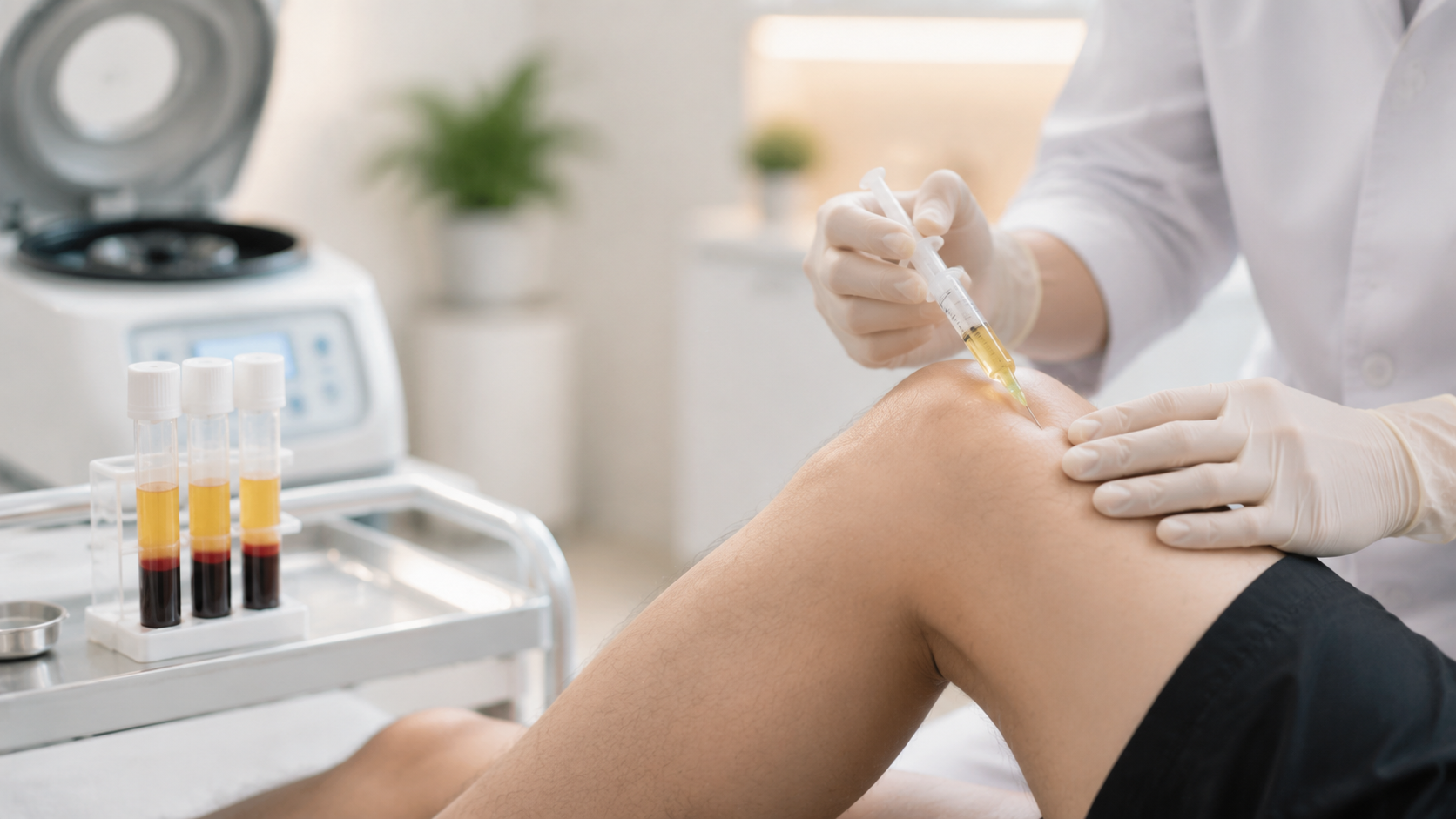
PRP (Platelet-Rich Plasma) Therapy is a treatment that concentrates platelets from a patient's own blood into an injectable preparation, which is then applied to a joint, tendon, or soft-tissue area as part of musculoskeletal care.
Learn More
Transcranial Magnetic Stimulation (TMS)
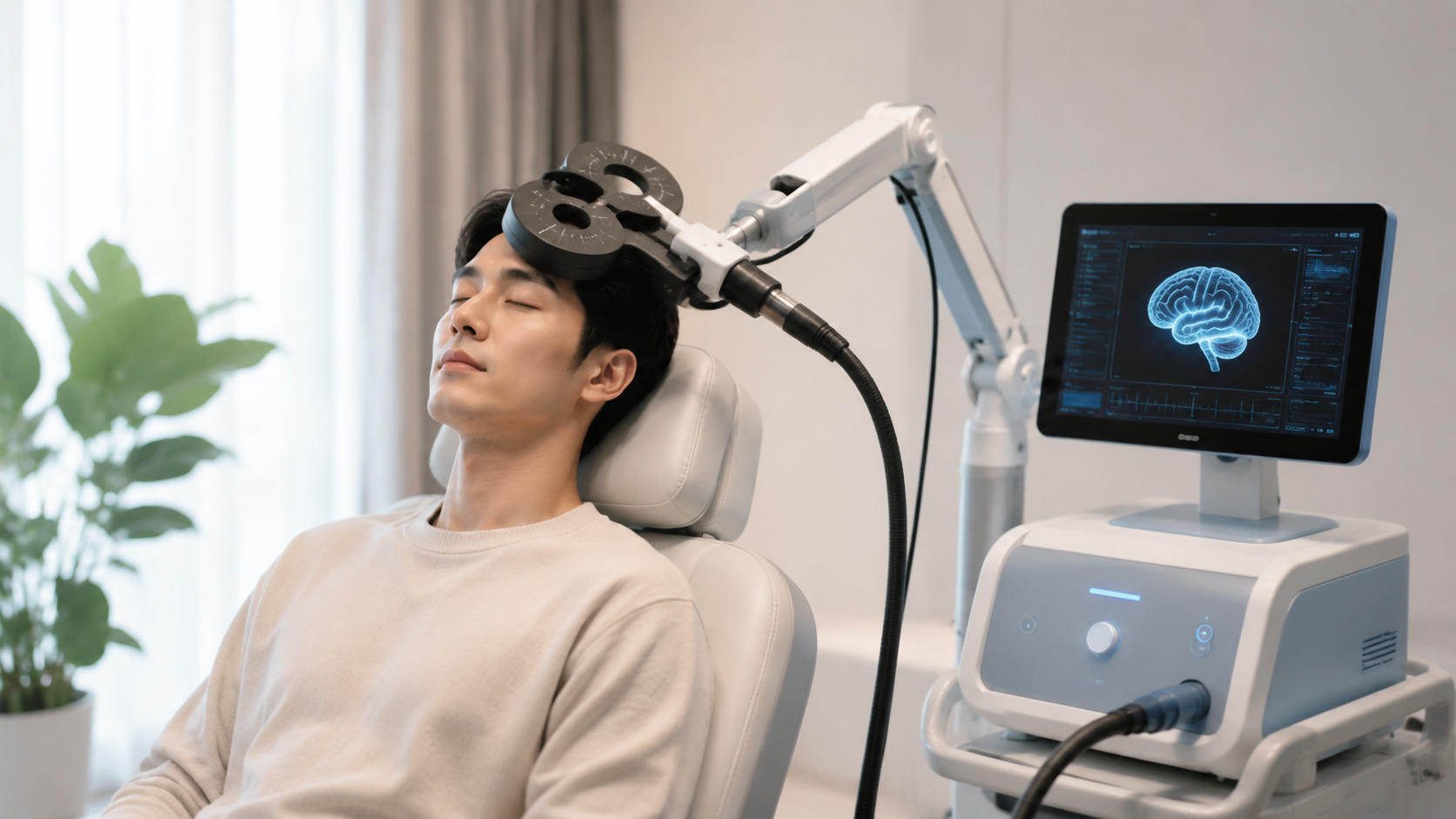
TMS is a non-invasive treatment method that uses magnetic pulses, rather than electricity applied directly to the scalp or surgery, to stimulate specific regions of the brain.
Learn More